
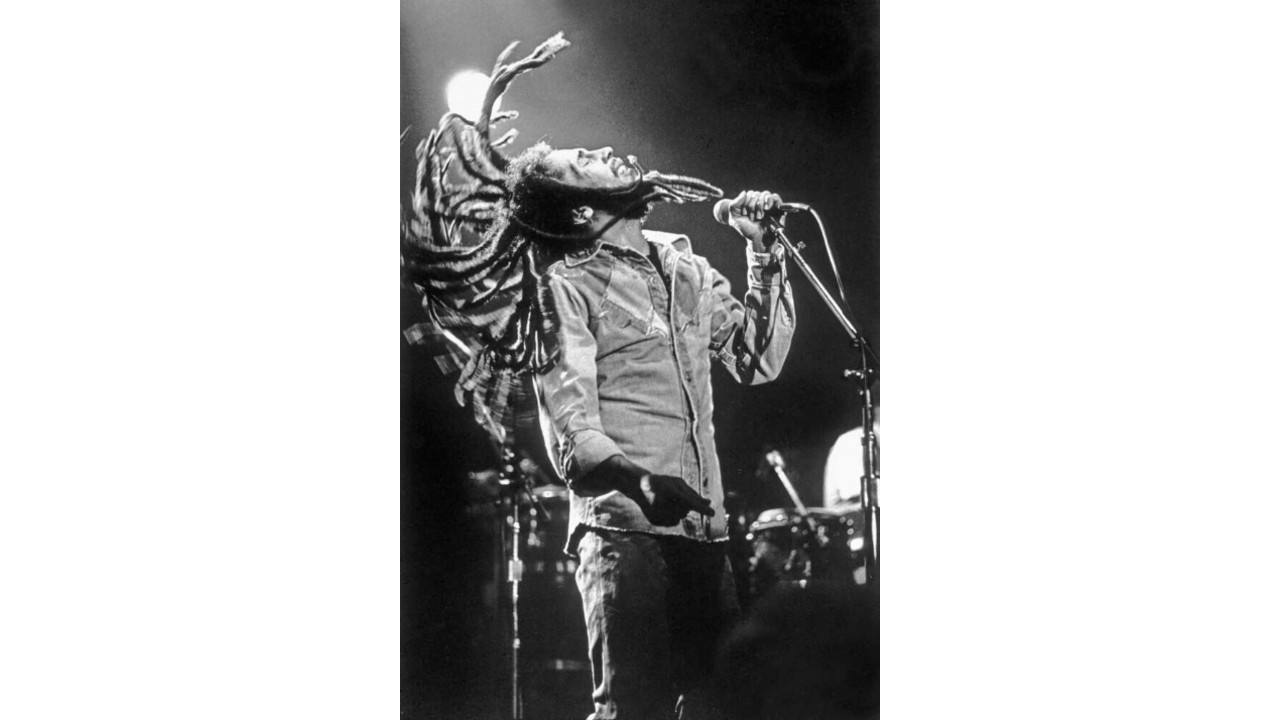
Bob Marley rose from modest beginnings in rural Jamaica to become one of the most influential musicians of the 20th century, transforming reggae into a global language of resistance, unity, and spiritual reflection. More than a performer, Marley emerged as a cultural force whose songs still resonate across generations and borders.
From Nine Mile to Kingston
Born in 1945 in the small village of Nine Mile, Marley grew up navigating both rural poverty and the tough streets of Kingston. These early experiences shaped the themes that would define his work: social injustice, identity, and hope amid hardship. As a teenager, he gravitated toward music, forming early groups that blended ska, rocksteady, and emerging reggae rhythms. By the late 1960s, Marley had refined a sound that was unmistakably his own — rooted in Jamaican tradition but open to global influence.

Music as message
Marley’s breakthrough came in the 1970s, when his recordings began reaching audiences far beyond the Caribbean. His lyrics addressed inequality, colonial legacy, and political violence, while also offering spiritual grounding through Rastafarian beliefs. Songs such as Get Up, Stand Up, No Woman, No Cry, and Redemption Song combined protest with empathy, turning deeply local stories into universal statements.
What set Marley apart was his ability to balance confrontation with compassion. His music called out oppression, yet consistently returned to themes of forgiveness, dignity, and collective uplift. In an era marked by Cold War tensions and post-colonial struggles, Marley became an unlikely global ambassador for peace.
A unifying figure in turbulent times
In Jamaica, Marley’s influence extended beyond entertainment. During periods of intense political violence in the late 1970s, he used his platform to promote reconciliation, most famously appearing on stage with rival political leaders in a symbolic gesture of unity. Internationally, his concerts drew diverse audiences, introducing millions to reggae while spotlighting the realities of life in developing nations.
His work also helped reframe how popular music could function — not merely as commercial product, but as social commentary and moral appeal. For many listeners, Marley offered both soundtrack and guidance through uncertain times.
Legacy beyond his lifetime
Marley died in 1981 at just 36 years old, yet his impact has only grown. His catalogue remains among the most streamed and recognised in music history, and his image continues to symbolise resistance, authenticity, and spiritual resilience. Beyond record sales, Marley’s enduring relevance lies in how his message adapts to new contexts — from civil rights movements to youth culture and global activism.
Today, Marley is remembered not simply as a reggae icon, but as a voice for the marginalised and a reminder of music’s power to bridge cultures. His work continues to inspire artists, policymakers, and communities seeking connection in a fragmented world.
In financial and cultural terms alike, Marley represents a rare phenomenon: an artist whose brand and ideas appreciate over time, driven not by nostalgia alone, but by ongoing relevance in debates around justice, identity, and human dignity.
Newshub Editorial in North America – 6 February 2026

If you have an account with ChatGPT you get deeper explanations,
background and context related to what you are reading.
Open an account:
Open an account
Recent Comments