
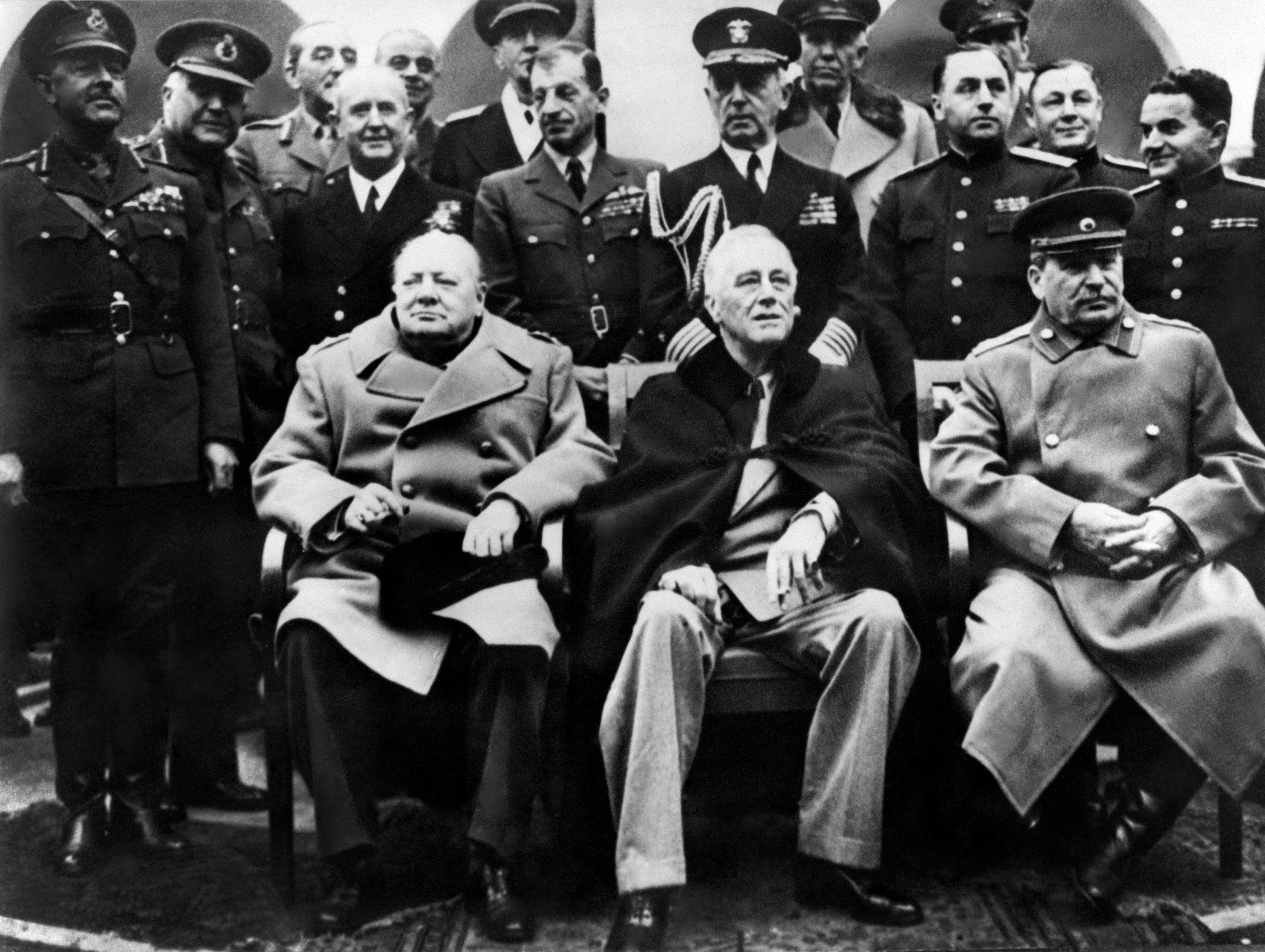
On this day in 1945, the Yalta Conference opened in Crimea, bringing together the Allied leaders at a decisive moment in World War II and setting the political foundations of post-war Europe. What unfolded over eight days would influence borders, governments, and global power dynamics for decades to come.
A summit at the edge of victory
Held at the Livadia Palace in Yalta, the meeting gathered British Prime Minister Winston Churchill, US President Franklin D. Roosevelt, and Soviet leader Joseph Stalin. With Nazi Germany nearing defeat, the focus had shifted from military coordination to the far more complex task of designing peace. Each leader arrived with distinct priorities: security guarantees, political influence, and economic recovery dominated the agenda.
Deciding Europe’s future
Central to the talks was the fate of Eastern Europe. The Allies agreed on the division of Germany into occupation zones and on the creation of a United Nations organisation to prevent future global conflicts. Poland’s borders were redrawn westward, a move that displaced millions. While commitments were made to hold free elections in liberated countries, the interpretation of those promises soon diverged sharply between East and West.

Seeds of the Cold War
At Yalta, cooperation still appeared possible. Yet the agreements also reflected unequal leverage. Soviet forces already occupied much of Eastern Europe, giving Moscow practical control on the ground. Western leaders hoped that diplomacy and institutions would moderate Soviet influence. Instead, the post-war years revealed deep ideological fractures. What began as wartime alliance gradually hardened into confrontation, marking the early contours of the Cold War.
Governance lessons that still resonate
Beyond geopolitics, Yalta offers enduring lessons in power, process, and accountability. Major decisions affecting entire nations were negotiated by a small group behind closed doors, with limited representation from the countries most impacted. The conference highlights how outcomes are shaped not only by stated principles but by timing, military realities, and bargaining power — a dynamic still visible in today’s international negotiations.
Why Yalta still matters in 2026
Eighty-one years later, Yalta remains a reference point whenever global leaders meet to resolve conflicts or redesign regional orders. It illustrates how peace settlements can carry long-term economic and political consequences, and how fragile consensus becomes when enforcement mechanisms are weak. For investors and policymakers alike, the conference stands as a reminder that stability is built on institutions, transparency, and credible commitments — not declarations alone.
As today’s world grapples with renewed geopolitical fragmentation, Yalta’s legacy underscores a fundamental truth: history is often shaped in conference rooms as much as on battlefields, and the structures created in moments of transition can define generations.
Newshub Editorial in Europe – 4 February 2026

If you have an account with ChatGPT you get deeper explanations,
background and context related to what you are reading.
Open an account:
Open an account
Recent Comments