
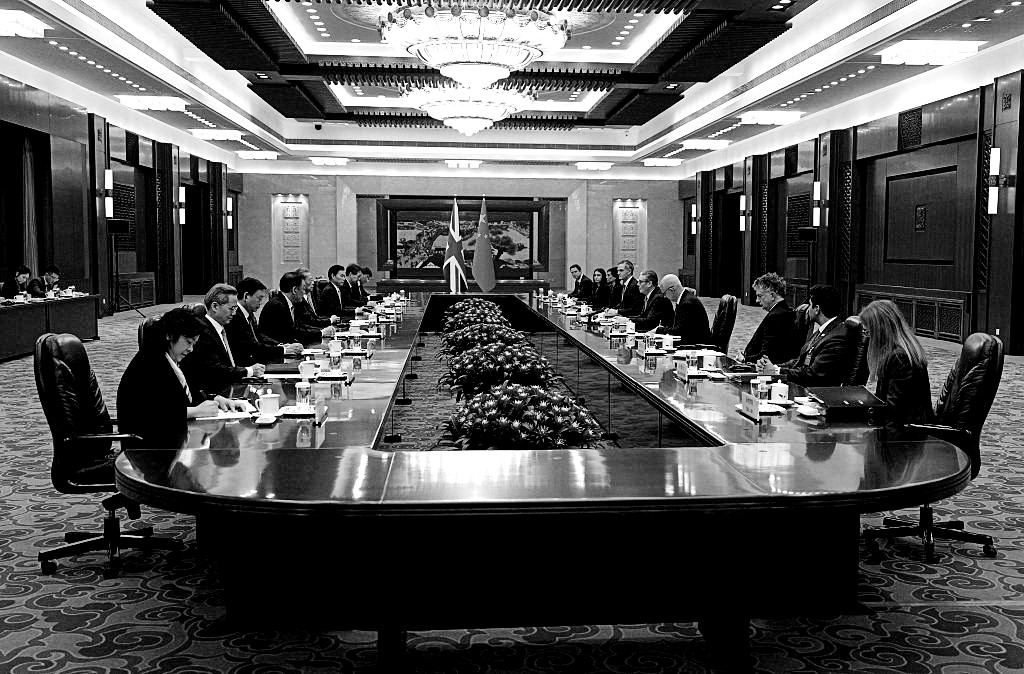
China’s president told Britain’s prime minister he hopes both countries can “rise above differences” as the two leaders met in Beijing, marking a carefully calibrated attempt to stabilise a strained bilateral relationship. The talks between Xi Jinping and Keir Starmer come amid heightened geopolitical tension, trade friction, and renewed debate in London over how to balance security concerns with economic engagement.
A message of pragmatism from Beijing
President Xi framed the meeting as an opportunity to rebuild trust through dialogue. He told the British prime minister that China and the UK should look for common ground and manage disagreements responsibly, signalling Beijing’s preference for stability over confrontation with major European partners. Chinese officials emphasised areas where cooperation remains possible, including trade, climate policy, education, and financial services, while downplaying issues that have dominated recent years, such as sanctions, human rights, and technology restrictions.
Starmer’s call for a “more sophisticated” relationship
Prime Minister Starmer, on his first official visit to China since taking office, struck a measured tone. He said the UK seeks a “more sophisticated” relationship with China — one that is realistic about differences but open to engagement where mutual interests align. Starmer made clear that Britain would continue to defend its values and national security, while also recognising China’s central role in the global economy and the need for structured, predictable dialogue between the two countries.

From freeze to managed engagement
UK–China relations have cooled sharply in recent years, marked by disputes over Hong Kong, concerns about Chinese investment in critical infrastructure, and growing alignment between London and Washington on strategic competition with Beijing. The Beijing meeting does not signal a wholesale shift in policy, but rather a move away from rhetorical escalation towards managed engagement. For London, this reflects an effort to regain diplomatic room for manoeuvre while maintaining close ties with allies.
Economic undercurrents shape the agenda
Trade and investment remain an unspoken driver of the talks. China is one of the UK’s largest trading partners, and British businesses — particularly in finance, energy, and advanced services — are eager for greater clarity and access. At the same time, the UK government faces domestic pressure to scrutinise Chinese involvement in sensitive sectors. The emphasis on a “sophisticated” relationship suggests a case-by-case approach, rather than blanket openness or blanket exclusion.
A signal watched beyond London and Beijing
The meeting is being closely observed across Europe and the United States. For Beijing, improving ties with the UK fits a broader strategy of preventing Europe from aligning too tightly with a hard-line containment approach. For London, the talks test whether it can pursue a distinct China policy without undermining transatlantic unity. The careful language used by both leaders underscores how narrow that path remains.
Incremental change, not a reset
While no major breakthroughs were announced, the symbolism of the meeting matters. It reflects a shared recognition that prolonged diplomatic chill serves neither side. Whether this encounter leads to sustained engagement will depend on follow-through — and on how both governments handle inevitable future disagreements. For now, the Xi–Starmer talks point to a cautious thaw, defined less by ambition than by pragmatism.
Newshub Editorial in Asia – 29 January 2026

If you have an account with ChatGPT you get deeper explanations,
background and context related to what you are reading.
Open an account:
Open an account
Recent Comments