
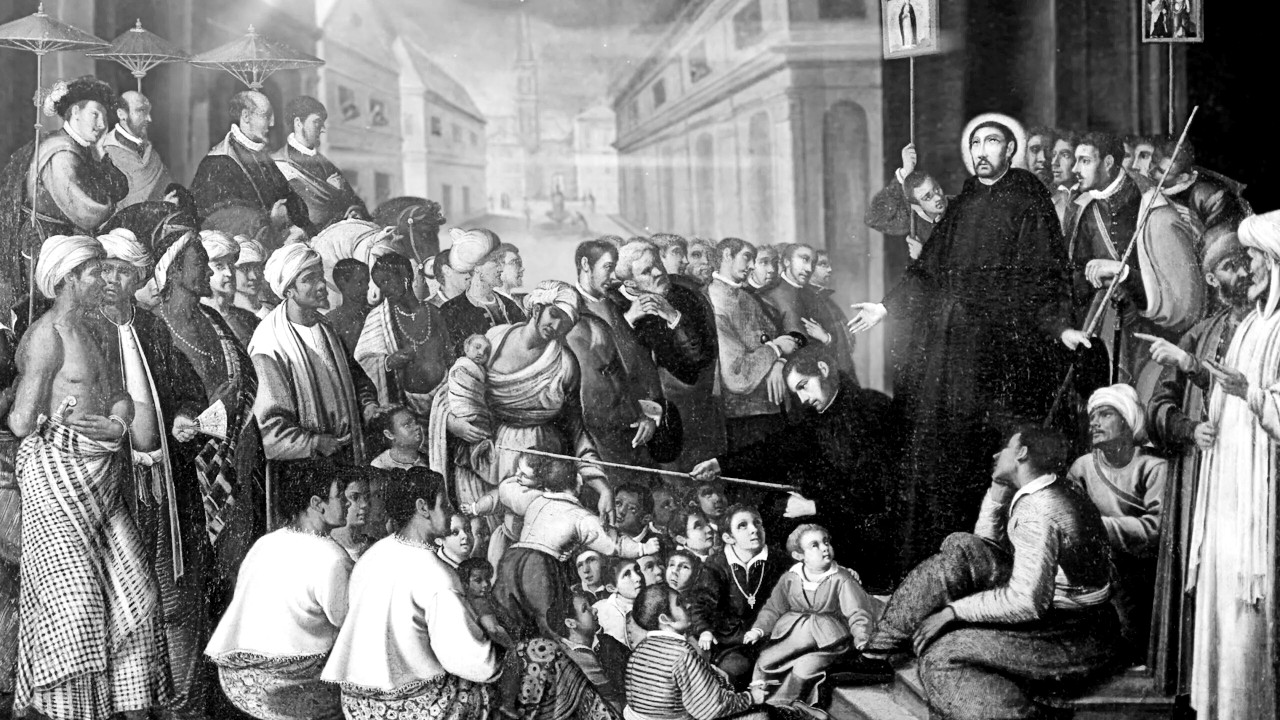
On 25 January 1554, a small Jesuit mission laid the foundations for what would become one of the world’s largest cities: São Paulo. What began as a modest religious and educational outpost on Brazil’s inland plateau has since evolved into a vast economic, cultural and demographic powerhouse, shaping the history of Brazil and Latin America.
A strategic mission on the plateau
The city of São Paulo traces its origins to the establishment of a Jesuit mission known as the Colégio de São Paulo de Piratininga. Founded by missionaries of the Society of Jesus, the settlement was strategically located on a high plateau between the coastal mountains and the interior. This position allowed the missionaries to reach Indigenous communities living inland, while also offering a defensible site away from coastal threats.
Jesuit goals and early leadership
The mission was part of a broader effort by the Society of Jesus to spread Christianity and Portuguese influence in the New World. Among its leading figures was Manuel da Nóbrega, one of the order’s earliest and most influential missionaries in Brazil. Alongside him was the young priest José de Anchieta, who would later become one of colonial Brazil’s most important religious and cultural figures.

Education, conversion and coexistence
Unlike many colonial settlements driven primarily by trade or extraction, São Paulo began as an educational and missionary centre. The Jesuits focused on teaching, language learning and religious instruction, seeking to integrate Indigenous peoples into Christian communities. This approach, while less violent than some colonial models, still imposed European cultural and religious norms and profoundly altered Indigenous ways of life.
From mission to settlement
Over time, the mission attracted Portuguese settlers, farmers and traders. Its inland location made it a base for expeditions known as bandeiras, which ventured deep into the continent in search of labour, land and resources. These expeditions played a significant role in expanding Portuguese territorial control, though often at great human cost to Indigenous populations.
A legacy that shaped a metropolis
By the late colonial period, São Paulo had grown from a Jesuit outpost into a permanent town, and later into a regional centre. The Jesuit foundations left a lasting imprint: education, administration and urban structure all developed around the original mission site. Today, São Paulo stands as a global megacity, yet its origins remain rooted in a small religious school established more than 470 years ago.
Newshub Editorial in South America – 25 January 2026

If you have an account with ChatGPT you get deeper explanations,
background and context related to what you are reading.
Open an account:
Open an account
Recent Comments