
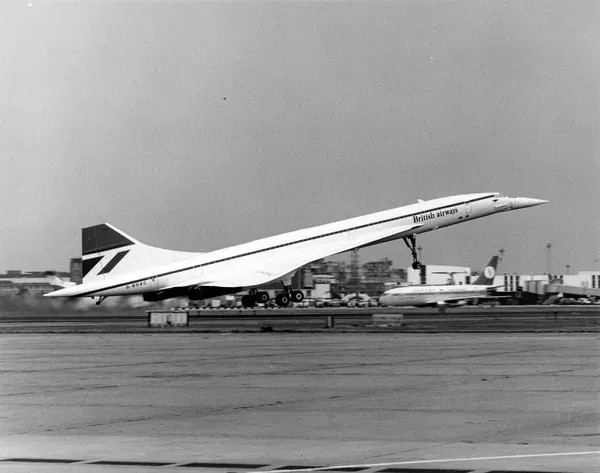
The first commercial Concorde flight marked a defining moment in aviation history, transforming supersonic travel from experimental ambition into a scheduled commercial service and reshaping global perceptions of speed, technology, and prestige in air transport.
On 21 January 1976, the world entered a new era of aviation. On that morning, Concorde began its first scheduled commercial passenger services, simultaneously operated by British Airways and Air France. British Airways launched its inaugural flight from London Heathrow to Bahrain, while Air France departed Paris Charles de Gaulle bound for Rio de Janeiro via Dakar. For the first time, fare-paying passengers experienced routine supersonic air travel.
From experimental aircraft to commercial service
Concorde was the product of an unprecedented Anglo-French collaboration, conceived in the early 1960s at the height of Cold War technological competition. Designed to cruise at more than twice the speed of sound, the aircraft could reduce transatlantic flight times by half. What had once been the domain of military jets was now entering civilian aviation, backed by national governments and state airlines determined to demonstrate technological leadership.


A revolution in speed and perception
The impact of Concorde’s commercial debut went far beyond timetable reductions. Flying at Mach 2 at an altitude of around 60,000 feet, Concorde offered passengers a journey above weather systems and conventional air traffic. A flight from London to New York would later take just over three hours, fundamentally altering expectations of long-haul travel. Supersonic flight became a symbol of modernity, confidence, and engineering excellence.
Luxury, exclusivity, and economics
From the outset, Concorde was positioned as a premium product. Cabins were small, seating was limited, and tickets were priced accordingly. The clientele consisted largely of business leaders, government officials, celebrities, and those willing to pay a significant premium for time savings and status. While the aircraft delivered unmatched speed, it also carried high operating costs, including fuel consumption, specialised maintenance, and strict regulatory requirements.
Environmental and political constraints
Despite its technological success, Concorde faced immediate limitations. Sonic booms restricted supersonic flight over land, confining most operations to oceanic routes. Environmental concerns over noise and emissions grew over time, particularly as public awareness of aviation’s impact increased. Political resistance in several countries further limited route expansion, preventing Concorde from achieving broader global deployment.
A lasting legacy
The first commercial Concorde flight remains one of the most significant milestones in civil aviation. Although the aircraft would eventually be retired in 2003, no commercial supersonic passenger service has replaced it to date. Concorde proved that supersonic travel was possible, safe, and commercially viable within a niche market, leaving a legacy that continues to influence modern discussions about the future of high-speed aviation.
Newshub Editorial in Europe – 21 January 2026

If you have an account with ChatGPT you get deeper explanations,
background and context related to what you are reading.
Open an account:
Open an account
Recent Comments