
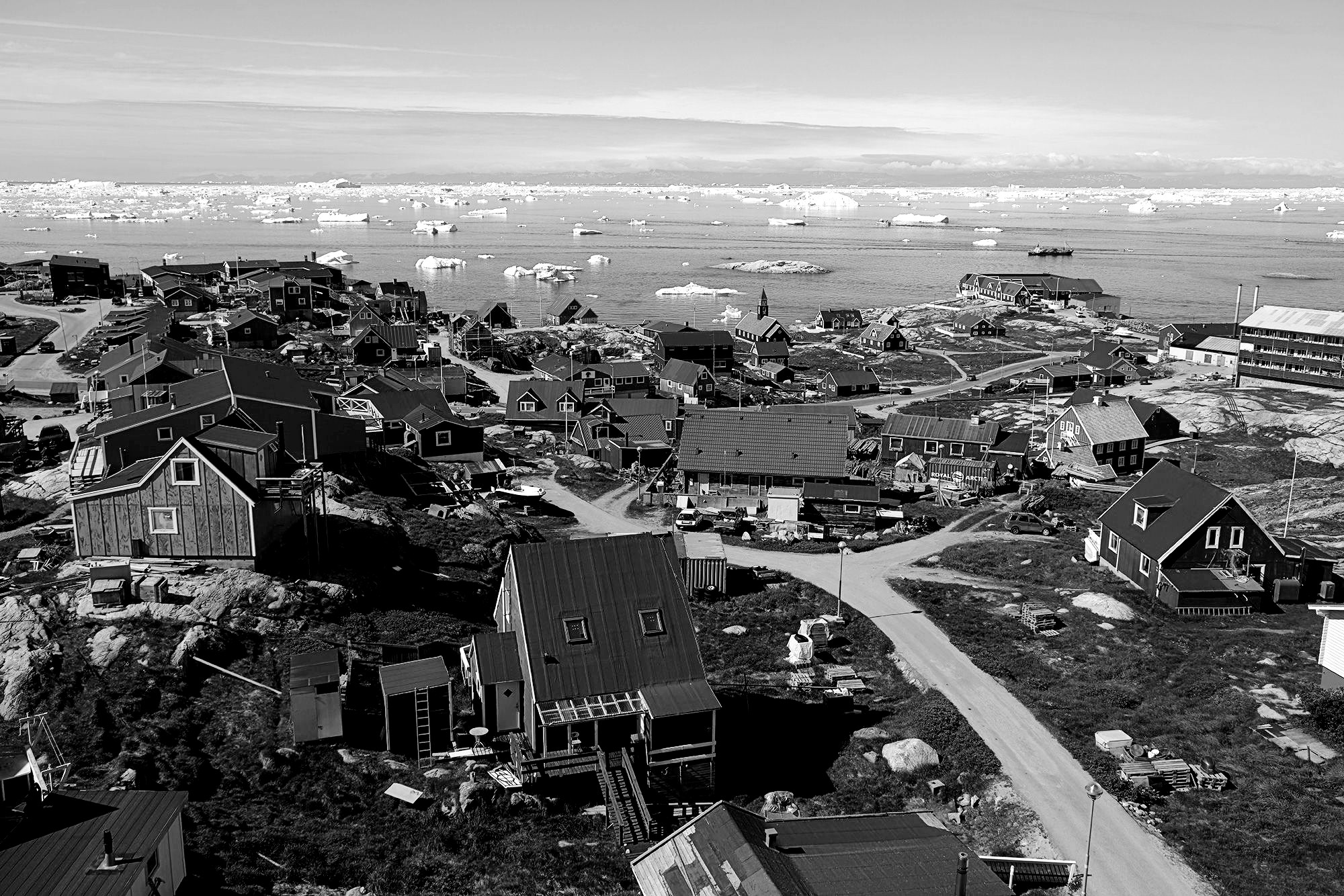
When Greenland resurfaces in global headlines, it is rarely because of its population, culture, or economy. It is because of power. Once again, the world’s largest island has become the focal point of a geopolitical debate where security, resources, and long-term strategic positioning intersect. At the centre of the discussion stands the renewed interest from the United States, framed by former president Donald Trump as a matter of national security. But beneath the rhetoric lies a more complex economic and strategic calculation.
A strategic location that money cannot easily price
Greenland’s primary value has never been measured in GDP. With a population of roughly 56,000 and an economy dependent on fishing, public transfers from Denmark, and limited tourism, the island itself generates modest economic output. Its importance lies instead in geography. Situated between North America and Europe, Greenland controls key Arctic air and sea routes that are becoming increasingly relevant as ice cover recedes. For the United States, which already operates the Thule Air Base, Greenland is a cornerstone of early-warning missile defence and Arctic surveillance.
Minerals, myths, and market realities
Much of the economic speculation centres on Greenland’s underground resources. The island is believed to hold significant deposits of rare earth elements, uranium, zinc, iron ore, and potentially oil and gas offshore. In theory, these resources could be valuable in a world seeking alternatives to Chinese-dominated supply chains. In practice, extraction is difficult. Extreme climate conditions, limited infrastructure, environmental opposition, and high capital costs have repeatedly stalled large-scale mining projects. Rare earths, in particular, require complex processing chains that Greenland currently lacks.

Climate change as an economic accelerant
Melting ice is often presented as an opportunity. Easier access to minerals, new shipping lanes, and expanded fisheries could, over time, increase Greenland’s economic relevance. However, climate change also introduces instability. Infrastructure must be built on thawing permafrost, environmental risks multiply, and insurance and financing costs rise accordingly. Any serious investor must weigh long-term gains against operational uncertainty that few frontier markets can match.
National security versus commercial logic
From Washington’s perspective, Greenland’s value is strategic rather than transactional. Control or influence over Greenland reduces vulnerability in the Arctic and counters growing Russian and Chinese activity in the region. From a purely financial standpoint, however, the island is not a ready-made cash generator. Even optimistic scenarios suggest decades of investment before meaningful returns materialise. This gap between strategic urgency and commercial reality explains why the debate persists.
So what is Greenland actually worth?
There is no credible market price for Greenland. Its value depends on who is asking and why. For the United States, it represents security, deterrence, and long-term Arctic dominance. For investors, it is a high-risk, long-horizon frontier with uncertain payback. For Denmark and Greenland itself, the question is less about sale value and more about sovereignty, autonomy, and sustainable development.
In the end, Greenland is not a gold mine waiting to be bought. It is a strategic asset whose true worth lies not in immediate revenue, but in power, positioning, and the future shape of the Arctic world.
Newshub Editorial in Europe – 21 January 2026

If you have an account with ChatGPT you get deeper explanations,
background and context related to what you are reading.
Open an account:
Open an account
Recent Comments