
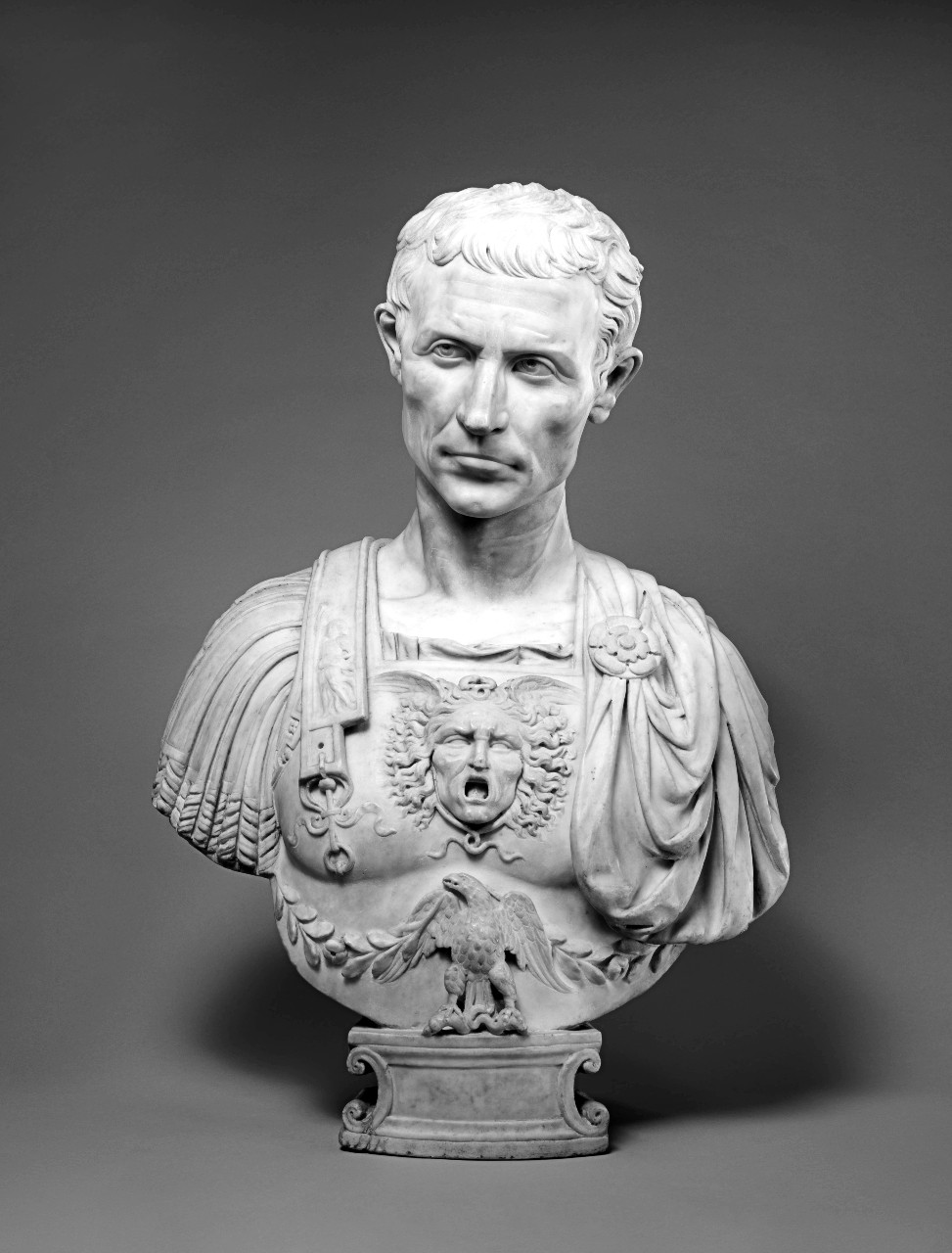
In January 49 BCE, Julius Caesar’s decision to lead his army across the Rubicon River transformed a political crisis into a civil war and altered the course of Roman—and European—history. What appeared to be a modest stream on the northern frontier of Italy became the symbolic boundary between lawful command and rebellion, and Caesar’s step across it marked the end of compromise and the beginning of a new political order.
A fragile republic under strain
By the late Roman Republic, power was increasingly concentrated in the hands of ambitious generals whose personal armies owed loyalty to commanders rather than the state. Julius Caesar, having concluded his proconsular command in Gaul, stood at the centre of this tension. His military successes had made him enormously popular with the legions and influential among the Roman populace, but deeply suspect to the Senate’s conservative faction. Roman law was explicit: a general was forbidden to enter Italy with troops under arms. To do so was to declare war on the state.
The Senate’s ultimatum
Political negotiations collapsed as Caesar’s rivals demanded he disband his legions before returning to Rome, while allowing his opponents to retain theirs. The Senate’s decree effectively stripped Caesar of protection and threatened prosecution. The Rubicon—then the legal boundary between Caesar’s provincial command and Italy proper—became the final line. Remaining north preserved legality but ensured political ruin; crossing meant rebellion but preserved agency.

“The die is cast”
Ancient sources record that Caesar paused before the river, fully aware of the consequences. When he finally ordered the crossing—traditionally dated to 10 January 49 BCE—he committed himself to civil war. The phrase attributed to him, alea iacta est (“the die is cast”), captures both the gamble and the irrevocability of the act. With a single decision, Caesar converted a constitutional dispute into an armed confrontation.
Rapid momentum and public reaction
The immediate aftermath favoured Caesar. His advance through Italy was swift, aided by the reluctance of many communities to resist and by the flight of key opponents, including Pompey the Great, who withdrew eastward to regroup. Caesar’s restraint toward cities that opened their gates won support and underscored his claim that he fought not Rome, but a faction within it. The Rubicon crossing thus proved not only a military move but a psychological one, signalling confidence and inevitability.
From civil war to transformation
The conflict that followed culminated in Caesar’s victory and, ultimately, his dictatorship. Although his assassination in 44 BCE briefly revived republican hopes, the precedent had been set. Power now flowed from military command and personal authority, paving the way for Augustus and the imperial system. The Republic’s legal frameworks survived in name, but their spirit had been irreversibly altered.
A lasting symbol
Today, “crossing the Rubicon” endures as shorthand for a decision that cannot be undone. The event resonates because it captures a universal moment: when caution gives way to commitment, and history turns on a single choice. In 49 BCE, that choice reshaped Rome—and with it, the political foundations of the Western world.
Newshub Editorial in Europe – 10 January 2026

If you have an account with ChatGPT you get deeper explanations,
background and context related to what you are reading.
Open an account:
Open an account
Recent Comments