
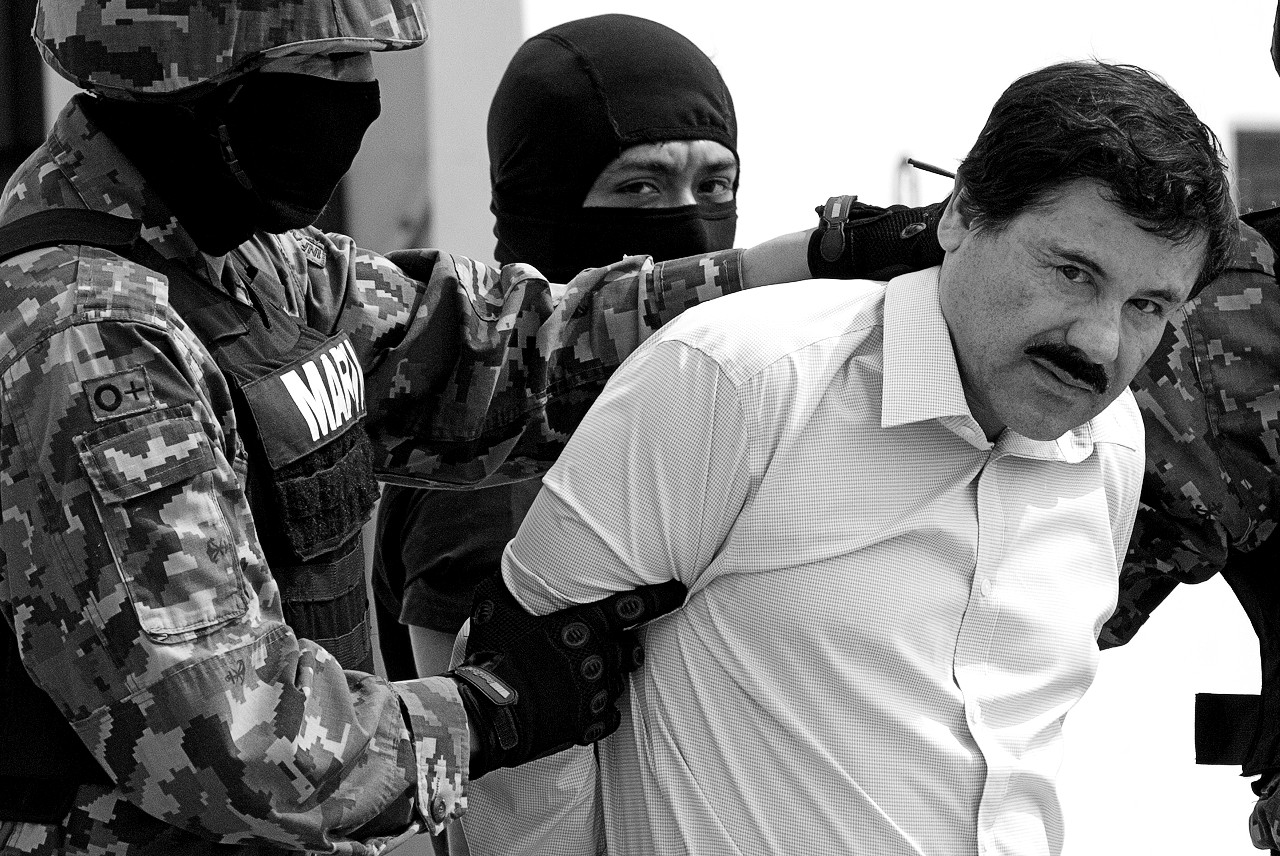
Mexican criminal Joaquín Guzmán, widely known as “El Chapo,” was captured in a landmark operation that marked one of the most significant blows ever dealt to organised crime in Mexico. The arrest of the Sinaloa cartel leader ended years of pursuit by Mexican authorities and their international partners, closing a dramatic chapter in the global war on drugs.
From rural beginnings to cartel dominance
Joaquín Guzmán rose from extreme poverty in the mountainous state of Sinaloa to become one of the most powerful and feared figures in international organised crime. Over several decades, he transformed the Sinaloa cartel into a sophisticated transnational enterprise, controlling major trafficking routes for cocaine, heroin, methamphetamine, and marijuana into the United States and beyond. His rise was marked by ruthless violence, strategic alliances, and an ability to evade law enforcement that earned him near-mythical status.
A history of escapes and humiliation for the state
Guzmán’s capture carried particular symbolic weight because of his repeated prison escapes. Most notably, he fled a maximum-security Mexican prison in 2001, allegedly hidden in a laundry cart, and again in 2015 through an elaborate tunnel equipped with lighting, ventilation, and a motorcycle on rails. These escapes severely damaged the credibility of Mexico’s justice system and underscored the depth of corruption and institutional weakness confronting the state.

The operation that led to his arrest
The successful capture followed months of intelligence work involving surveillance, intercepted communications, and coordinated operations by elite Mexican security forces. Authorities described the arrest as the result of persistent pressure rather than a single dramatic confrontation. Officials stressed that avoiding civilian casualties and restoring confidence in state authority were central priorities of the operation.
International implications and cooperation
El Chapo’s downfall had immediate international repercussions. The United States, which had long sought his extradition, hailed the arrest as a major victory against drug trafficking networks responsible for immense social and economic harm. The case highlighted the increasingly close cooperation between Mexican and US law enforcement agencies, particularly in intelligence sharing and targeting high-value criminal figures.
A cartel built to survive leadership losses
Despite the significance of Guzmán’s arrest, experts cautioned against viewing it as a definitive victory over the drug trade. The Sinaloa cartel had evolved into a decentralised organisation with strong regional leadership, diversified revenue streams, and deep-rooted social and economic influence. History suggested that removing a single leader, even one as powerful as El Chapo, would not automatically dismantle the criminal infrastructure he helped create.
Symbolism, justice, and the wider struggle
Ultimately, the capture of Joaquín Guzmán represented both a triumph and a reminder of the scale of the challenge facing Mexico and the international community. It demonstrated that even the most elusive criminals could be brought to justice, while also exposing the enduring structural conditions—poverty, corruption, and demand for illicit drugs—that allow such figures to emerge. El Chapo’s arrest closed one chapter, but the broader fight against organised crime remained far from over.
Newshub Editorial in North America – 8 January 2026

If you have an account with ChatGPT you get deeper explanations,
background and context related to what you are reading.
Open an account:
Open an account
Recent Comments