

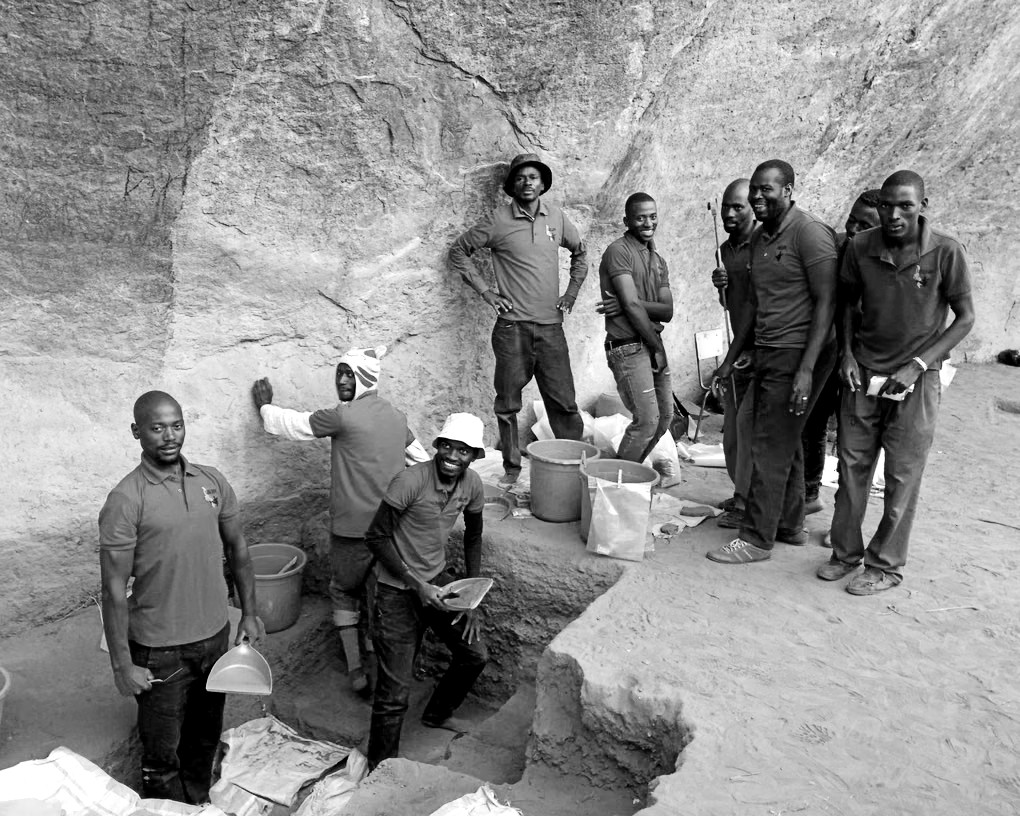
A cremation pyre uncovered in Malawi and dated to approximately 9,500 years ago is believed to be the world’s oldest known example containing the remains of an adult, offering rare and significant insight into the ritual practices of early African hunter-gatherer societies.
A discovery of global significance
Archaeologists working at a prehistoric site near Lake Malawi have identified what is now considered the earliest confirmed cremation pyre associated with adult human remains. The find predates previously known cremation evidence by several millennia and challenges long-held assumptions about when and where complex funerary practices emerged.
The remains were discovered within a deliberately constructed fire feature, containing calcined bones that analysis confirms belonged to an adult individual. Radiocarbon dating places the pyre at around 9,500 years old, during the early Holocene period, a time when human communities across Africa were adapting to climatic shifts following the last Ice Age.

Evidence of intentional ritual practice
Researchers emphasise that the cremation was not accidental or the result of a natural fire. The placement of the body, the structure of the pyre, and the condition of the bones all point to a deliberate and controlled burning process. This suggests the act held symbolic or ritual significance rather than being purely practical.
Until now, cremation was often viewed as a much later development in human funerary behaviour, commonly associated with agricultural or urbanised societies. The Malawi pyre demonstrates that hunter-gatherer groups were already engaging in sophisticated mortuary rituals far earlier than previously documented.
Reframing Africa’s archaeological narrative
The discovery adds to a growing body of evidence highlighting Africa’s central role in the evolution of complex human behaviour. While burial sites from early African societies are relatively rare due to preservation challenges, this find provides a rare and direct window into belief systems, social structures, and attitudes toward death among prehistoric communities.
The presence of cremation suggests an understanding of transformation, purification, or symbolic release, although researchers caution against imposing modern interpretations on ancient practices. What is clear, however, is that these communities invested time and care in commemorating their dead.
Implications for global archaeology
The Malawi cremation pyre compels archaeologists to reconsider global timelines of ritual innovation. It indicates that practices often associated with later periods may have developed independently in different regions, shaped by local environments and cultural contexts.
This has broader implications for how early human societies are compared across continents. Rather than viewing technological and ritual complexity as linear or regionally confined, the evidence points toward multiple centres of early innovation.
A rare glimpse into early human belief
Finds of this nature are exceptionally uncommon, particularly in tropical regions where organic material deteriorates rapidly. The survival of the cremated remains, combined with precise dating, makes the site a crucial reference point for future research into early mortuary behaviour.
As excavation and analysis continue, researchers hope the site will yield further clues about the community that carried out the cremation and how such rituals fit into their broader social lives. For now, the discovery stands as a reminder that humanity’s capacity for symbolic thought and ritual expression has deep roots in Africa’s distant past.
Newshub Editorial in Africa – 2 January 2026
Recent Comments