
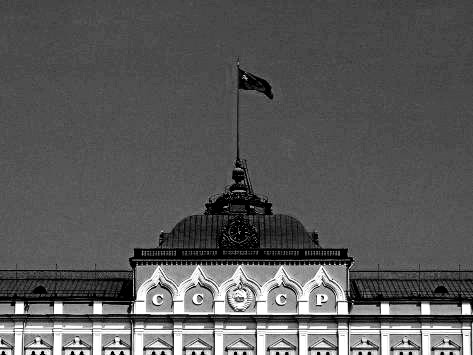
The Soviet Union formally came to an end on 26 December 1991, closing the chapter on one of the most influential political entities of the 20th century. The dissolution was not the result of a single dramatic collapse, but the culmination of a legal and political process that unfolded over several months, marking the definitive end of the Cold War era.
A state unravelled through law, not war
Unlike many empires before it, the Union of Soviet Socialist Republics did not fall through invasion or revolution. Instead, its dissolution was executed through constitutional acts, treaties, and formal declarations. By late 1991, the Soviet state had lost effective control over its constituent republics, most of which had already declared independence following failed reforms and a botched coup attempt in August that year.
The Belavezha Accords
The decisive legal step came on 8 December 1991, when leaders of Russia, Ukraine, and Belarus met in a forest residence in Belarus and signed the Belavezha Accords. The agreement stated plainly that the Soviet Union “as a subject of international law and a geopolitical reality” no longer existed. In its place, the Commonwealth of Independent States (CIS) was established, providing a loose framework for cooperation among former Soviet republics.

The role of Moscow and the Russian Federation
Russia, the largest and most powerful Soviet republic, assumed a central role in the dissolution process. Under President Boris Yeltsin, Russia asserted sovereignty over Soviet institutions and resources, including control of the armed forces and the nuclear arsenal. This shift effectively hollowed out the Soviet state from within, leaving little more than a legal shell by December.
Gorbachev’s resignation
On 25 December 1991, Soviet President Mikhail Gorbachev resigned in a televised address. A day later, the Soviet of the Republics, the upper chamber of the Supreme Soviet, formally voted to dissolve the Union. The red flag was lowered from the Kremlin for the last time, replaced by the tricolour of the Russian Federation.
International recognition and legal finality
Following the vote, international bodies and foreign governments recognised Russia as the legal successor state to the Soviet Union. Russia inherited the USSR’s seat at the United Nations Security Council, along with its treaty obligations and debts. The remaining republics entered the international system as independent states, reshaping political and economic dynamics across Eastern Europe, the Caucasus, and Central Asia.
A geopolitical turning point
The legal dissolution of the Soviet Union marked the definitive end of a bipolar world order. It accelerated the expansion of market economies and democratic institutions in some regions, while triggering economic hardship, political instability, and unresolved conflicts in others. The effects continue to shape global politics more than three decades later.
The end of an era, not of its influence
While the Soviet Union ceased to exist as a legal entity, its legacy remains deeply embedded in international relations, security architecture, and national identities across Eurasia. The events of December 1991 were not merely administrative formalities, but a historic realignment whose consequences still reverberate today.
Newshub Editorial in Europe – 26 December 2025

If you have an account with ChatGPT you get deeper explanations,
background and context related to what you are reading.
Open an account:
Open an account
Recent Comments