
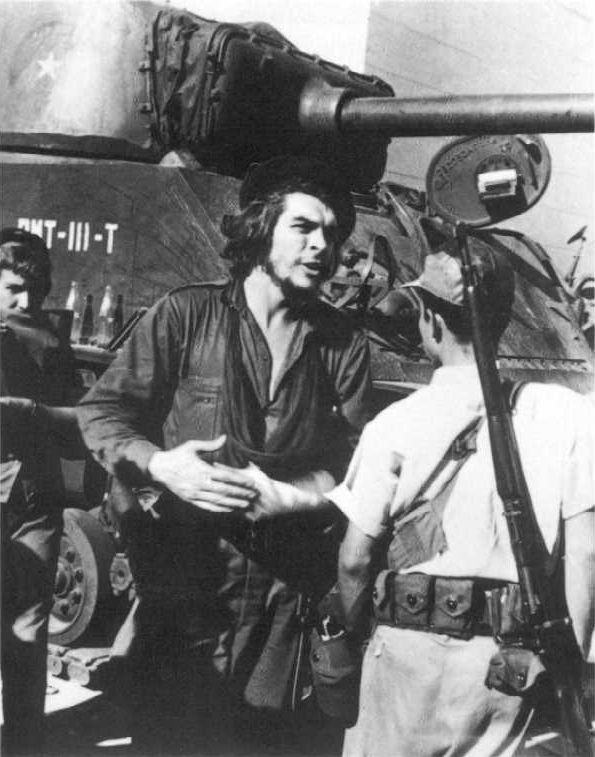
In late December 1958, a decisive battle unfolded in the central Cuban city of Santa Clara, where rebel forces led by Ernesto “Che” Guevara routed a government garrison and captured an armoured train packed with weapons and ammunition. The dramatic victory shattered the remaining military resolve of the Batista regime and accelerated the collapse of the Cuban government, bringing the revolution to an end just days later.
A strategic target in the heart of Cuba
Santa Clara held immense strategic importance. Located at the centre of the island, it served as a critical transport and supply hub linking western and eastern Cuba. By late 1958, government forces loyal to President Fulgencio Batista were already demoralised after months of guerrilla warfare waged by revolutionary columns advancing from the Sierra Maestra and other regions.
Batista ordered a heavily fortified armoured train to Santa Clara, carrying elite troops, heavy machine guns, artillery pieces, and large quantities of ammunition. The train was intended both as a show of force and as a last attempt to stabilise the situation in central Cuba.

Guerrilla tactics against superior firepower
Che Guevara, commanding a relatively small and lightly armed rebel column, recognised that defeating the train could deliver a decisive psychological and military blow. Rather than engaging the garrison head-on, the rebels used classic guerrilla tactics: sabotage, mobility, and local support.
The rebels tore up railway tracks using improvised tools, causing the train to derail on the outskirts of the city. Cut off, immobilised, and surrounded, the government troops found themselves vulnerable despite their superior weaponry. After hours of fighting and negotiations, the soldiers surrendered.
A windfall of weapons and momentum
The capture of the armoured train yielded a massive cache of arms and ammunition. These supplies immediately strengthened the rebel forces, enabling them to overwhelm remaining government positions in Santa Clara. The fall of the city marked the most significant rebel victory of the war outside Havana.
Equally important was the symbolic impact. News of the defeat spread rapidly across the island, reinforcing the perception that Batista’s forces were no longer capable of resisting the revolutionary advance.
The final collapse of the Batista regime
Within days of the Santa Clara defeat, the situation became untenable for Batista. On 1 January 1959, he fled Cuba, effectively ending organised resistance to the rebels. Revolutionary forces led by Fidel Castro soon entered Havana, cementing their victory.
The armoured train battle became one of the most iconic moments of the Cuban Revolution, frequently cited as the turning point that sealed the regime’s fate. For Che Guevara, the victory solidified his reputation as a revolutionary tactician and symbol of armed struggle.
Enduring historical significance
Decades later, the events at Santa Clara remain central to Cuba’s revolutionary narrative. The derailed train is preserved as a historical monument, and the battle continues to be taught as a textbook example of how asymmetrical warfare, strategic insight, and morale can outweigh conventional military strength.
The seizure of the armoured train was not merely a battlefield success; it was the moment when the balance of power irreversibly shifted, clearing the final path to revolutionary victory.
Newshub Editorial in North America – 27 December 2025
Recent Comments