

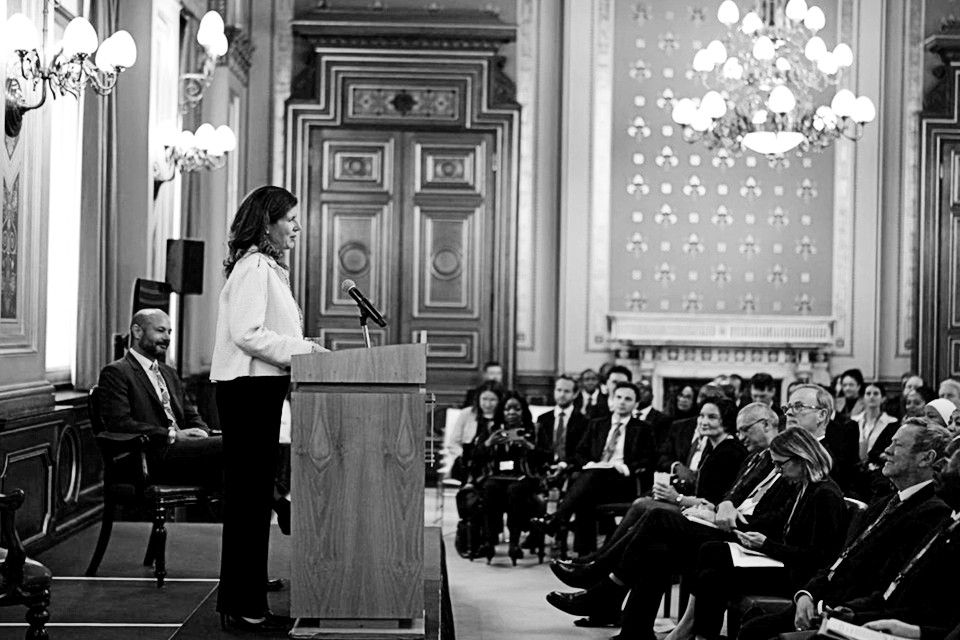
The UK has launched a new “Approach to Africa”, with Baroness Chapman formally outlining the government’s strategy in a major speech in London to African ambassadors and high commissioners, UK parliamentarians, and key Africa policy shapers from civil society and the private sector. The move signals a recalibration of Britain’s engagement with the continent, placing greater emphasis on partnership, mutual growth, and long-term strategic alignment.
A reset in UK–Africa relations
Delivering the address, Baroness Chapman described the new approach as a shift away from transactional or aid-centric engagement towards a more balanced relationship rooted in trade, investment, security cooperation, and people-to-people ties. She emphasised that Africa’s growing economic and geopolitical weight requires a modern framework that recognises African countries as equal partners rather than policy recipients.
The speech was positioned as a foundational statement, setting the tone for how the UK intends to engage with African governments and institutions over the coming decade.

Focus on partnership, not prescription
Baroness Chapman stressed that the UK’s Africa policy would be guided by listening rather than lecturing. She highlighted the importance of aligning British engagement with African priorities, including industrialisation, job creation, climate resilience, and digital transformation. This approach reflects growing recognition in London that sustainable influence depends on relevance and respect, particularly as African states diversify their global partnerships.
The strategy also acknowledges Africa’s demographic momentum, with a rapidly growing and increasingly urban population shaping global labour markets and consumer demand.
Trade, investment, and economic diplomacy
Economic engagement featured prominently in the speech. The UK’s new approach aims to deepen trade links, support British and African businesses, and mobilise private capital into infrastructure, energy, and technology projects. Baroness Chapman underscored the role of the private sector as a central pillar of the strategy, arguing that long-term prosperity will be driven by commercial partnerships rather than public funding alone.
She also highlighted the importance of fair financing structures and risk-sharing mechanisms to unlock investment into emerging African markets.
Security and global challenges
Beyond economics, the strategy places renewed emphasis on security cooperation, conflict prevention, and shared responses to global challenges such as climate change and migration. Baroness Chapman noted that instability in parts of Africa has direct implications for global security and that collaborative solutions are essential.
The approach seeks to strengthen cooperation with regional organisations and support African-led solutions to political and security challenges, rather than externally imposed interventions.
Engaging diplomacy and the African diaspora
The London event brought together diplomats, lawmakers, civil society leaders, and business figures, reflecting the multi-layered nature of the new strategy. Baroness Chapman also pointed to the role of the African diaspora in the UK as a bridge between markets, cultures, and policy communities, suggesting it will play a more active role in shaping future engagement.
Strategic implications
The launch comes amid intensifying global competition for influence in Africa, with China, the Gulf states, the EU, and the US all expanding their presence. By articulating a clearer and more coherent Africa policy, the UK is seeking to remain relevant and credible as a long-term partner.
A framework for the next phase
While implementation details will emerge over time, the speech marks a clear intent to redefine UK–Africa relations. If matched by consistent policy delivery and investment, the new approach could strengthen Britain’s standing across the continent and provide a more durable foundation for cooperation in an increasingly multipolar world.
Newshub Editorial in Africa – 21 December 2025
Recent Comments