
A commercial airline pilot has described an “outrageous” near midair collision with a US air force aircraft near Venezuelan airspace, raising renewed questions about military flight transparency and aviation safety in congested international corridors.
Incident reported during routine commercial flight
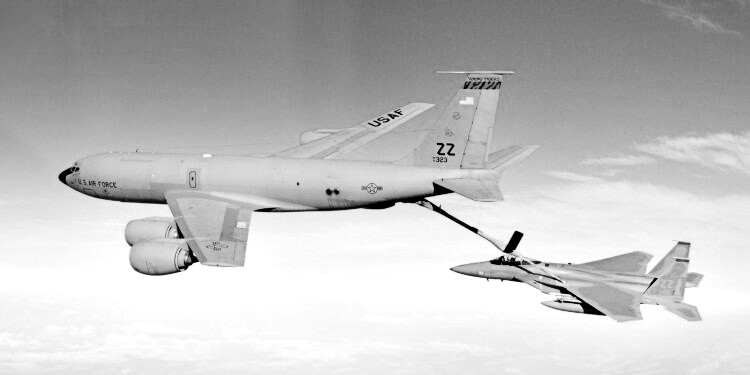
The incident occurred during a routine commercial flight operated by JetBlue, when the aircraft came unexpectedly close to a US military refuelling tanker while cruising at altitude over the Caribbean region near Venezuela. According to the pilot, the military aircraft was not transmitting a transponder signal, making it invisible to standard collision-avoidance systems used by civilian planes. The pilot said evasive action was taken after visually spotting the tanker at close range, preventing what could have been a catastrophic collision.
Concerns over inactive transponder systems
Modern commercial aircraft rely heavily on transponders to identify nearby traffic and provide warnings through onboard systems. The JetBlue pilot stated that the US military tanker’s transponder appeared to be switched off, leaving air traffic controllers and nearby aircraft unaware of its precise position. Aviation safety experts note that while military aircraft may occasionally limit transmissions for operational reasons, doing so in busy civilian airspace significantly increases risk.

US military presence in sensitive airspace
The Caribbean region near Venezuela has seen heightened US military activity in recent years, largely linked to counter-narcotics operations and regional security monitoring. These missions often involve aerial refuelling tankers and surveillance aircraft operating at high altitude. While such operations are legal in international airspace, aviation analysts stress that coordination with civilian traffic is essential, particularly along routes heavily used by commercial carriers travelling between North America, South America and the Caribbean.
Airline and pilot reactions
JetBlue confirmed that it is aware of the incident and is reviewing the circumstances internally, while emphasising that passenger safety was never compromised. The pilot involved reportedly filed a safety report after landing, urging aviation authorities to address the risks posed by unidentified military aircraft operating near commercial flight paths. Pilot unions have echoed those concerns, calling for clearer protocols when military and civilian aviation intersect.
Regulatory and safety implications
The near miss is likely to prompt discussions between aviation regulators and defence authorities. Civil aviation bodies generally require transponders to remain active in shared airspace, except under narrowly defined circumstances. Experts warn that even a single lapse can have severe consequences, given the closing speeds and limited reaction times at cruising altitude. Calls are growing for improved communication and mandatory safeguards to prevent similar incidents in the future.
Broader questions for global aviation
Beyond the immediate safety concerns, the episode highlights broader tensions between military operations and civilian air travel in geopolitically sensitive regions. As global air traffic continues to recover and expand, the margin for error is shrinking. Ensuring transparency and coordination between military and civilian aviation will remain critical to maintaining trust and safety in international skies.
Newshub Editorial in the Americas – 18 December 2025
Recent Comments