
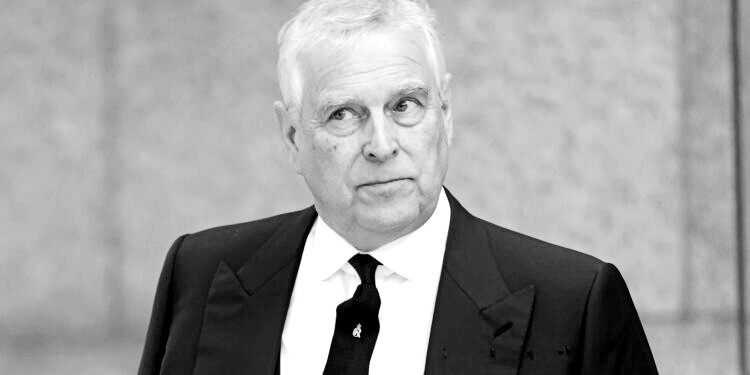
Prince Andrew’s trajectory from celebrated royal to isolated figure is one of the most consequential internal crises the British monarchy has faced in the modern era. Once promoted as a symbol of a younger, outward-looking royal family, Andrew became instead a warning about entitlement, opaque privilege and the reputational risks of unchecked power. His association with Jeffrey Epstein, combined with financial controversies and a series of catastrophic personal decisions, has left him stripped of public roles, military honours and practical standing within the institution that once defined his identity. This is not merely a story of personal failure, but a long-running case study in governance, accountability and institutional survival.
From spare heir to national asset
Born in 1960, Prince Andrew entered the world as the Queen’s second son and, for a significant period, second in line to the throne. In the early decades of Elizabeth II’s reign, this position carried both expectation and opportunity. Andrew was raised within the most privileged structures of British society, educated accordingly, and from an early age prepared for a visible public role.
His naval career became the cornerstone of his public reputation. Training as a helicopter pilot, Andrew served during the Falklands War in 1982, flying missions under combat conditions. This experience granted him credibility at a time when the monarchy was keen to project relevance and sacrifice. For years, the image of Andrew as the “war hero prince” insulated him from criticism and reinforced the idea that he was not merely royal by birth, but by service.

In 1986 he married Sarah Ferguson, quickly becoming one of the most visible royal couples of the decade. Their public popularity was intense but short-lived. Media scrutiny, personal indiscretions and financial pressures strained the marriage, leading to separation and divorce in the 1990s. Even then, Andrew retained public goodwill. Divorce, in the post-Diana era, was no longer fatal to royal reputation.
The trade envoy years and the culture of access
Andrew’s defining institutional role came in 2001, when he was appointed the UK’s Special Representative for International Trade and Investment. The position was deliberately ambiguous. He was not a minister, not a civil servant, and not accountable to Parliament in any conventional sense. His value lay in access: the ability to open doors, arrange meetings and lend royal legitimacy to British commercial interests abroad.
This model worked—until it didn’t. Andrew travelled extensively, cultivating relationships with political leaders, financiers and business elites across the Middle East, Central Asia, Africa and Eastern Europe. Supporters argued that this was precisely what he was appointed to do. Critics countered that the lack of transparency surrounding his meetings and outcomes created a fertile environment for conflicts of interest.
The nickname “Air Miles Andy” captured public unease. It suggested extravagance, entitlement and an absence of measurable value. While no formal wrongdoing was established during his tenure, the perception of excess stuck. In reputational terms, Andrew was becoming a liability long before his name became synonymous with Epstein.
Royal Lodge and the problem of private privilege
Few aspects of Andrew’s story have inflamed public opinion as consistently as Royal Lodge, his residence in Windsor Great Park. Granted under a long lease from the Crown Estate, the property is expansive, historically significant and symbolically loaded. The terms of the arrangement—often described as involving a large upfront premium, extensive refurbishment obligations and a nominal rent—were legal but politically toxic.
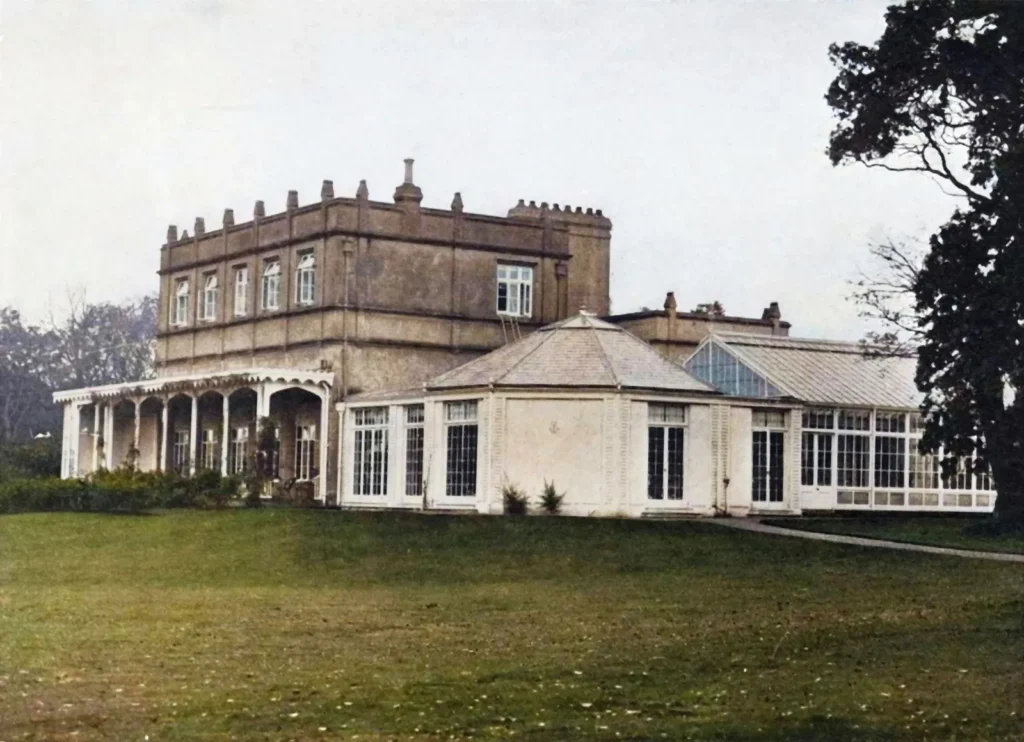
Royal Lodge became shorthand for a deeper problem: how a royal who no longer performed visible public service could continue to enjoy privileges associated with the state. The issue was never just the building. It was what the building represented—a separation between legal entitlement and moral legitimacy.
As Andrew’s public role diminished, Royal Lodge became increasingly difficult to justify. Each new scandal revived the same question: why should someone effectively removed from royal duties continue to live in a property so closely associated with the Crown? Over time, the residence ceased to be a home and became an argument.
The Epstein connection
Andrew’s association with Jeffrey Epstein was the decisive rupture. Epstein was not a marginal figure; he was a financier who embedded himself in elite networks, using wealth, access and social capital as tools of influence. Andrew’s friendship with Epstein and Ghislaine Maxwell was not secret, nor was it initially considered scandalous within elite circles.
The problem was timing and judgement. Epstein’s 2008 conviction for soliciting a minor fundamentally changed the context. Continued association after that point could no longer be dismissed as ignorance. For the public, this distinction was critical. It transformed Andrew’s narrative from poor judgement to moral failure.
Virginia Giuffre’s allegations that she was trafficked to Andrew when she was 17 placed him at the centre of a global reckoning about power, abuse and institutional complicity. Andrew denied the allegations, but denial alone proved insufficient in the face of mounting documentation, witness accounts and broader patterns revealed by the Epstein case.
The interview that ended everything
In November 2019, Andrew agreed to a televised interview intended to clarify his position and halt the damage. Instead, it destroyed what remained of his public credibility. The interview was widely criticised for its tone, content and lack of empathy. Explanations offered for his whereabouts on key dates were ridiculed, and his discussion of Epstein appeared detached from the gravity of the crimes involved.
More damaging than any single statement was the overall impression: a man insulated by privilege, incapable of understanding how his words would be received by a public increasingly sensitive to issues of abuse and accountability. The interview marked the end of Andrew’s ability to function as a public royal.
Within days, he announced he was stepping back from public duties indefinitely. The monarchy moved swiftly to distance itself, signalling that Andrew’s position was no longer defensible.
Legal pressure and settlement
In 2021, Giuffre filed a civil lawsuit against Andrew in the United States. The case posed an existential threat to both Andrew and the monarchy. Civil litigation carries discovery risks that institutions fear: sworn testimony, document disclosure and prolonged media scrutiny.
In 2022, the case was settled out of court. Andrew made no admission of wrongdoing, and the financial terms were not disclosed. The settlement included language expressing regret for his association with Epstein and acknowledgement of Giuffre’s suffering as a victim of abuse.
Legally, the settlement ended the case. Reputationally, it did not. For the monarchy, the decision was clear: Andrew could not return to public life. The settlement closed a legal chapter but confirmed a moral verdict already reached by public opinion.
Stripping of titles and roles
Following the settlement, Andrew was stripped of his remaining military affiliations and royal patronages. He ceased using the HRH style in any official capacity. These steps were unprecedented in their severity and intent. They represented a deliberate institutional choice to separate Andrew from the Crown.
In subsequent years, further measures reinforced that separation. Remaining honorary titles were withdrawn, and pressure mounted for him to vacate Royal Lodge. The message was unmistakable: whatever protections family might afford, institutional legitimacy came first.
The long tail of scandal
Andrew’s story did not end with legal settlement or withdrawal from duties. Renewed scrutiny, memoirs, court releases and media investigations continued to resurface details of the Epstein network. Each cycle reopened wounds the monarchy hoped had closed.
This is the defining feature of reputational collapse in the digital age: it does not conclude. It recurs. Andrew’s absence from public life has not insulated him from scrutiny; it has ensured that when his name reappears, it does so unopposed by any positive counter-narrative.
Why Andrew matters to the monarchy
Prince Andrew’s downfall has reshaped how the British monarchy understands risk. Three lessons stand out.
First, privilege without accountability is unsustainable. Andrew operated for years in roles that relied on trust rather than oversight. When trust collapsed, there were no buffers.
Second, opacity magnifies damage. Financial arrangements, property leases and settlements that might have been defensible if transparent became symbols of entitlement when obscured.
Third, institutions survive by sacrificing individuals when necessary. The monarchy’s gradual but firm distancing from Andrew demonstrates a hard truth: continuity requires credibility, even at the cost of personal humiliation.
Where he stands now
Today, Prince Andrew exists in a state of enforced invisibility. He retains his title by birth, but little else. He performs no public duties, holds no meaningful roles and exercises no influence within the institution that once defined him.
His story is not one of exile, but of contraction. Each year has narrowed his world further, reducing his presence to the margins of royal life. In doing so, the monarchy has drawn a line—not only around Andrew, but around the standards it claims to uphold.
Prince Andrew’s fall is ultimately a story about the end of exception. In a system built on inherited privilege, he became the proof that even royalty has limits when legitimacy is at stake.
Newshub Editorial in Europe – 2025-12-17
Recent Comments