
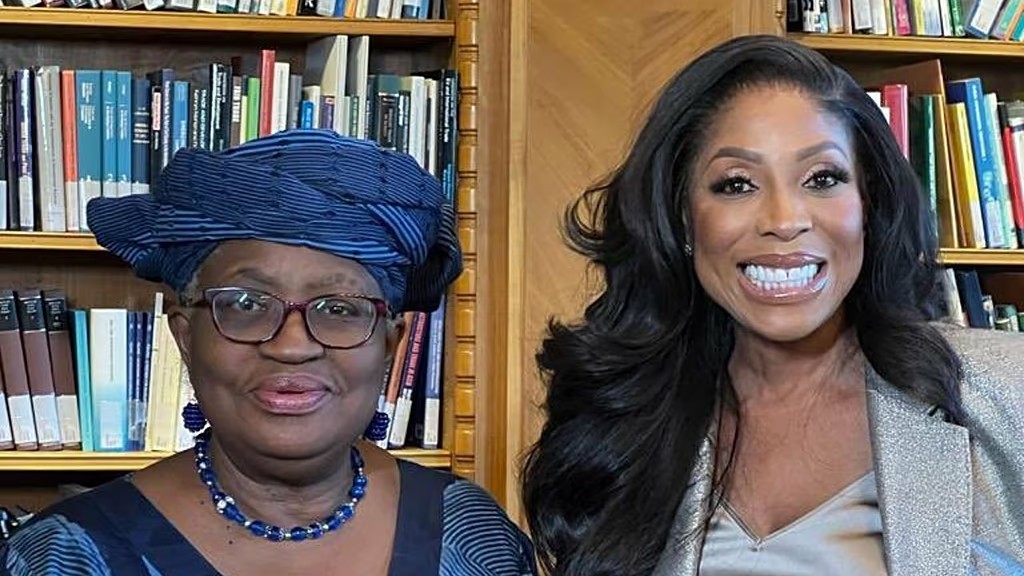
Across Africa, women are redefining leadership in politics, business and media, and Forbes’ 2025 power list has recognised six figures whose achievements are reshaping the continent’s economic and global standing.
Financial leadership at the highest level
Mary Vilakazi’s rise to the top of South Africa’s corporate sector marks a historic milestone. A chartered accountant by training, she began her career at PwC, becoming one of its youngest-ever partners at just 27. After serving as CFO of the Mineral Services Group, she joined FirstRand in 2018 as Group COO. On 1 April 2024, Vilakazi was appointed CEO of FirstRand Group, becoming the first woman and the first Black woman to lead South Africa’s largest financial-services firm by market value. Her appointment has been widely seen as a signal of change in the country’s traditionally male-dominated financial sector.
Breaking political ground in central and southern Africa
In the Democratic Republic of Congo, Judith Suminwa Tuluka made history in June 2024 by becoming the country’s first female prime minister. An economist and former UNDP official, she previously served as Minister of State and Planning, where she built a reputation for technical expertise in public finance, budgeting and programme evaluation. Her leadership is viewed as critical in strengthening national coordination and economic governance.


Namibia also entered a new era in March 2025, when Netumbo Nandi-Ndaitwah was sworn in as the country’s first female president. A veteran politician and former vice president, she has held key portfolios including foreign affairs and environment. Since taking office, she has prioritised debt reduction and the reinforcement of national policy frameworks, signalling a pragmatic and fiscally focused presidency.
Corporate scale and execution
Mpumi Madisa represents another breakthrough in South Africa’s corporate landscape. In October 2020, she became CEO of Bidvest, making her the first Black woman to lead a top-40 company listed on the Johannesburg Stock Exchange. Having risen through roles in sales, marketing and corporate affairs, Madisa has overseen Bidvest’s global expansion, a return to strong profitability and the management of a workforce of around 130,000 employees.
Global economic influence
Few African leaders wield as much international influence as Ngozi Okonjo-Iweala. One of the world’s most respected economists, she has held senior roles at the World Bank, chaired Gavi, and co-chaired the Global Commission on the Economy and Climate. In March 2021, she became the first woman and first African to lead the World Trade Organization, and her reappointment for a second term in 2024 reinforced her standing as a central figure in global trade governance.
Shaping culture and global narratives
In media and culture, Mo Abudu has transformed how African stories reach the world. As founder of EbonyLife Media, she has built a platform that connects African creators with global audiences. In 2025, Time magazine named her among the 100 most influential people in the world. Her recent launch of the US$50 million Afro Film Fund, alongside the expansion of EbonyLife Place to London, has further cemented her role as a cultural power broker.
Together, these six women exemplify a broader shift in African leadership — one defined by competence, global reach and long-term impact. Their presence on the Forbes 2025 power list reflects not only individual success, but a continent increasingly shaped by women at the highest levels of influence.
Newshub Editorial in Africa – 16 December 2025
Recent Comments