

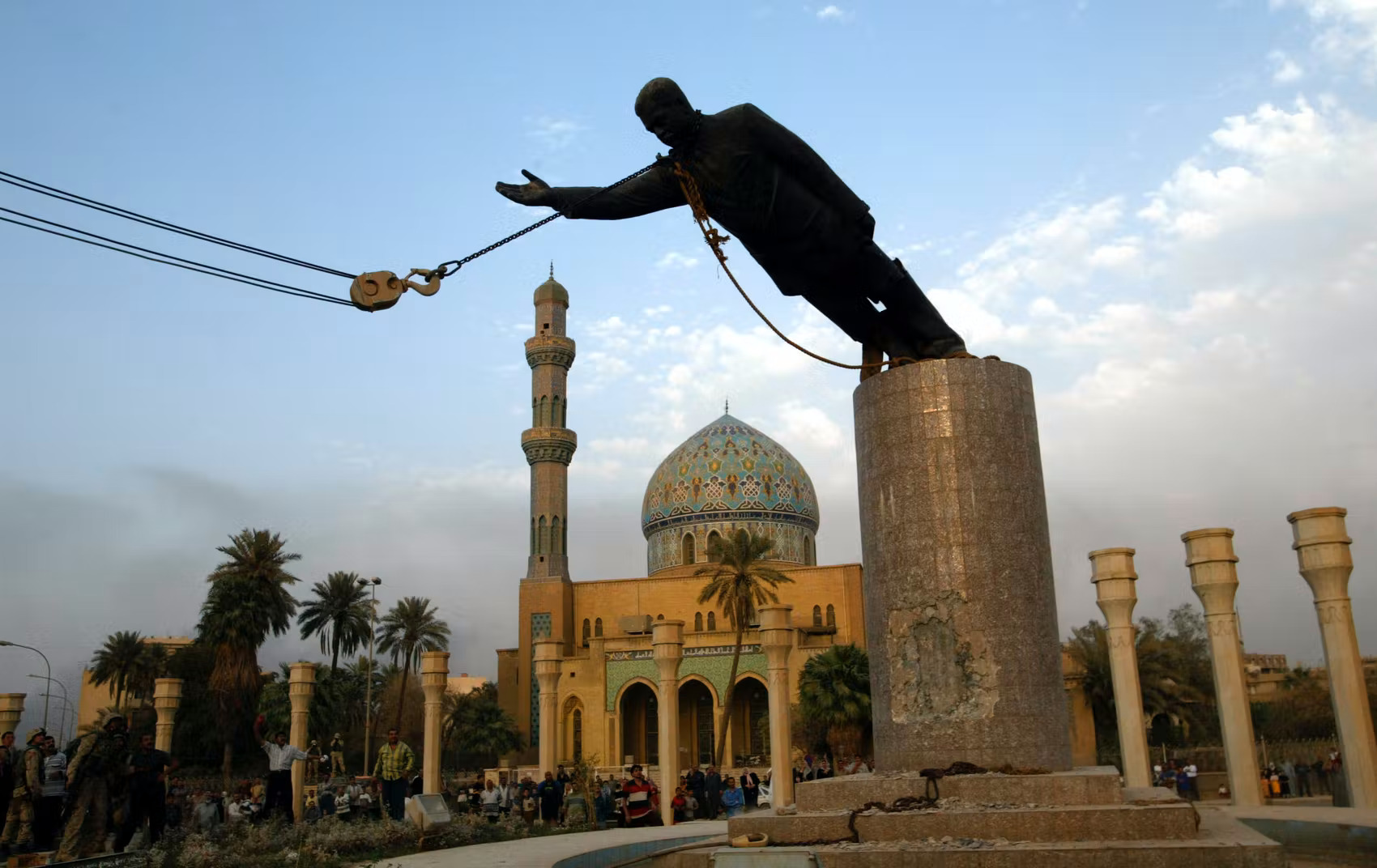
The Iraq War, launched in March 2003, remains one of the most consequential and controversial military conflicts of the 21st century, reshaping Iraq, destabilising the Middle East, and profoundly influencing global politics for decades to come.
Origins and justification
The conflict was led by the United States and the United Kingdom, supported by a smaller coalition, and justified primarily on claims that Iraqi leader Saddam Hussein possessed weapons of mass destruction and maintained links to terrorist organisations. These assertions were presented as urgent threats to international security in the aftermath of the 11 September 2001 attacks. However, no active weapons of mass destruction programmes were found following the invasion, a fact that later severely undermined the political credibility of the war’s architects.
The invasion and collapse of the Iraqi state
Coalition forces entered Iraq on 20 March 2003, rapidly defeating the Iraqi military and capturing Baghdad within weeks. Saddam Hussein’s regime collapsed swiftly, culminating in his capture in December 2003 and execution three years later. While the initial military campaign was brief, the dismantling of Iraq’s state institutions — including the army and security services — created a power vacuum that would prove disastrous.

Insurgency and sectarian violence
The years that followed were marked by a violent insurgency and escalating sectarian conflict between Sunni and Shia communities. Armed groups targeted coalition forces, Iraqi civilians, and newly formed government institutions. The situation deteriorated further after 2006, when sectarian killings surged, pushing the country toward civil war. Despite a temporary reduction in violence following the US troop “surge” in 2007, long-term stability remained elusive.
Regional and global consequences
The Iraq War had far-reaching regional implications. It significantly expanded Iran’s influence in Iraq, altered the balance of power in the Middle East, and fuelled extremist movements. One of the most notable outcomes was the rise of Islamic State, which exploited instability in Iraq and neighbouring Syria to seize large territories in 2014. The conflict also strained transatlantic relations and intensified global debates over military intervention, intelligence credibility, and international law.
Human cost and legacy
The human toll of the war has been immense. Hundreds of thousands of Iraqi civilians are estimated to have died, while millions were displaced internally or forced to flee the country. Thousands of coalition soldiers were also killed, with many more suffering long-term physical and psychological injuries. Infrastructure damage, economic disruption, and political fragmentation continue to affect Iraq today.
An unfinished chapter
Although major combat operations officially ended years ago, the Iraq War’s legacy remains unresolved. Iraq has made progress toward political normalisation, yet corruption, militia influence, and fragile institutions persist. The conflict stands as a defining case study in modern warfare — illustrating the risks of intervention, the limits of military power, and the enduring consequences of decisions taken under contested premises.
Newshub Editorial in the Middle East – 15 December 2025
Recent Comments