

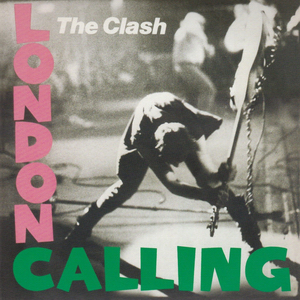
When The Clash released London Calling in December 1979, the record did far more than cement the band’s status as the most politically articulate force in British punk. It marked a decisive turning point for the genre itself, expanding punk’s musical and cultural horizons while retaining its urgency, anger and social conscience.
A band at a crossroads
By the end of the 1970s, punk rock faced an existential question. The initial explosion of raw, fast, three-chord rebellion had shaken Britain, but critics were already declaring the movement exhausted. The Clash, led by Joe Strummer and Mick Jones, refused to accept that verdict. Rather than repeating the stripped-down formula of their early work, the band chose reinvention. London Calling emerged from this moment of tension, ambition and creative risk.
A sound far beyond punk
From its opening title track to the closing “Train in Vain”, London Calling is striking in its stylistic range. Punk energy remains the backbone, but it is fused with reggae, ska, rockabilly, soul and even hints of jazz. Songs such as “Rudie Can’t Fail” and “The Guns of Brixton” drew heavily on Black British and Caribbean musical traditions, reflecting the multicultural reality of late-1970s London. This musical openness set The Clash apart from many of their contemporaries and pointed the way for alternative rock in the decades to come.

Lyrics shaped by crisis and conflict
The album’s lyrical themes are equally expansive. Britain in 1979 was gripped by economic decline, industrial unrest and political uncertainty, and London Calling captured that mood with unusual clarity. Strummer’s writing addressed unemployment, racial tension, police power and global instability, while also exploring personal disillusionment and fractured relationships. The apocalyptic imagery of the title track, often interpreted as a warning about nuclear war or environmental collapse, gave the album a sense of urgency that resonated far beyond the punk scene.
An iconic visual statement
Just as influential as the music was the album’s visual identity. The cover photograph of bassist Paul Simonon smashing his instrument on stage became one of the most recognisable images in rock history. Its design, echoing Elvis Presley’s debut album typography, linked rock’s rebellious past with its turbulent present. The image encapsulated the album’s spirit: controlled chaos, cultural continuity and defiance.
Critical acclaim and lasting influence
Upon release, London Calling received widespread critical praise and gradually achieved commercial success, particularly in the United States. Over time, it has come to be regarded as one of the greatest albums ever recorded, frequently topping critics’ lists across genres and generations. Its influence can be heard in post-punk, alternative rock and politically engaged music worldwide.
A defining moment in modern music
More than four decades on, London Calling endures because it refused to accept limits. It proved that punk could evolve without losing its soul, combining experimentation with conviction and accessibility with depth. In doing so, The Clash did not just release a breakthrough album; they redefined what punk rock could be, leaving a legacy that continues to shape popular music and political expression today.
Newshub Editorial in Europe – 14 December 2025
Recent Comments