

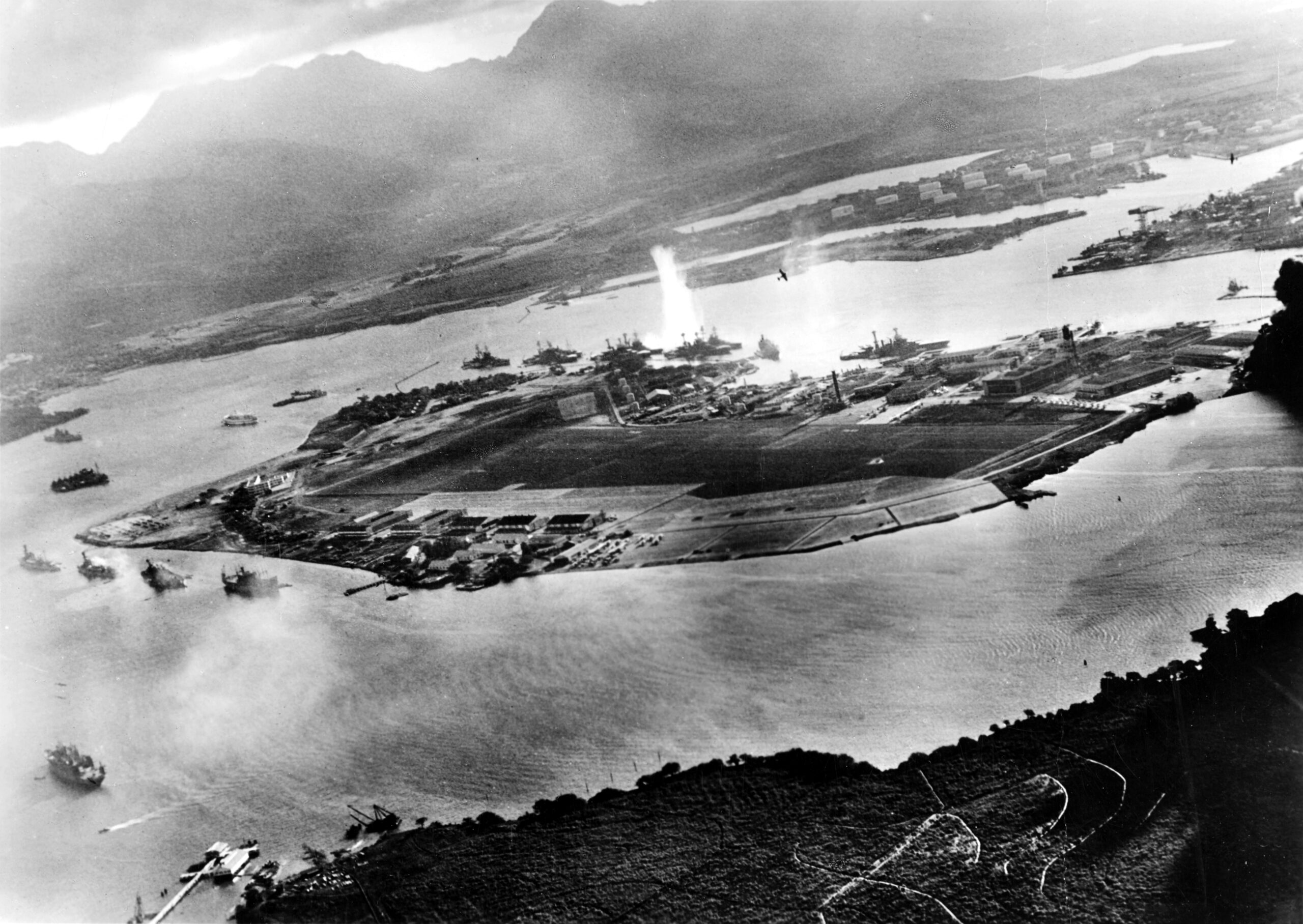
The attack on Pearl Harbor on 7 December 1941 marked a decisive turning point in the Second World War, propelling the United States into the conflict and altering the balance of global power. The surprise assault by Japanese forces devastated the US Pacific Fleet and triggered a rapid escalation that would define the course of the war in both the Pacific and Europe.
Strategic surprise and immediate devastation
Japanese aircraft began their assault shortly before 08:00 local time, targeting battleships, airfields, and critical infrastructure across the Pearl Harbor naval base in Hawaii. The operation aimed to neutralise US naval capabilities and secure Japan’s expansion across East Asia and the Pacific. Within two hours, the attack had sunk or damaged eight battleships, destroyed nearly 200 aircraft, and caused the deaths of more than 2,400 Americans. The USS Arizona and USS Oklahoma suffered the most catastrophic losses, symbolising the profound shock the attack inflicted on the nation.
A calculated gamble by Imperial Japan
Tokyo’s leadership believed that a rapid, overwhelming strike would discourage US intervention in Japan’s regional ambitions. The plan relied heavily on surprise and the assumption that the United States, faced with significant naval losses, would pursue negotiation rather than enter a prolonged conflict. However, intelligence misjudgments and a fundamental misunderstanding of US political resolve undermined the strategic rationale. Instead of deterring American involvement, the attack solidified domestic support for war and ended any remaining neutrality debates.

American mobilisation and global consequences
President Franklin D. Roosevelt addressed Congress the following day, calling 7 December “a date which will live in infamy.” The United States declared war on Japan, and within days Germany and Italy, Japan’s allies, declared war on the United States. What had been a regional struggle in Asia and a European conflict now merged into a fully global war. American industrial capacity, military manpower, and financial resources began to mobilise on an unprecedented scale, transforming the Allied war effort.
Long-term legacy of a defining moment
The attack on Pearl Harbor has become one of the most studied military events in modern history, shaping doctrines on intelligence, readiness, and deterrence. It also forged a lasting narrative of resilience, as the United States rebuilt its Pacific Fleet and shifted decisively to an offensive strategy. The event remains a central component of American memory and national identity, commemorated annually and analysed for its strategic lessons.
Newshub Editorial in North America – 7 December 2025
Recent Comments