

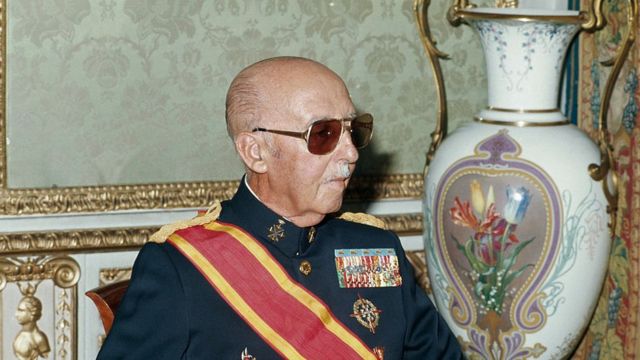
General Francisco Franco remains one of Europe’s most divisive 20th-century leaders, nearly five decades after his death. His rule, which stretched from the end of the Spanish civil war in 1939 until 1975, left a profound imprint on Spain’s political institutions, public memory, and national identity. Recent debates over historical memory laws, exhumations, and the role of the far-right have kept Franco’s legacy firmly in public discourse, underscoring that the questions he posed for Spain remain unresolved.
Rise to power
Franco emerged as the dominant figure among Nationalist forces during the Spanish civil war, positioning himself as head of state and commander-in-chief. His victory over the Republican government in 1939 ushered in a period of authoritarianism defined by political repression, strict censorship, and the consolidation of a one-party state. Franco’s regime initially aligned itself with fascist movements in Europe, although it maintained formal neutrality during the second world war.
Authoritarian governance
Under Franco, Spain developed a centralised and hierarchical system built around nationalism, Catholic conservatism, and anti-communism. Political pluralism was banned, labour unions were absorbed into state structures, and dissent was punished through imprisonment, exile, or execution. The regime sought to reshape Spanish society through education, culture, and strict control of the press, aiming to reinforce loyalty to the state and to Franco personally.

Economic transformation
Spain’s economy remained stagnant in the immediate post-war period due to autarkic policies and international isolation. This shifted in the late 1950s and 1960s when a group of technocrats implemented liberalising reforms that accelerated industrialisation and tourism. The resulting “Spanish miracle” modernised Spain’s infrastructure and raised living standards, although benefits were uneven and social freedoms remained restricted.
Transition and contested memory
Franco’s death in 1975 opened the path to Spain’s peaceful transition to democracy, culminating in the 1978 constitution. Yet the legacy of the dictatorship continues to provoke debate. In recent years, disputes over public monuments, mass graves, and the treatment of victims of repression have intensified. The 2019 exhumation of Franco’s remains from the Valley of the Fallen marked one of the most visible attempts by modern governments to address historical memory.
Newshub Editorial in Europe – 4 December 2025
Recent Comments