
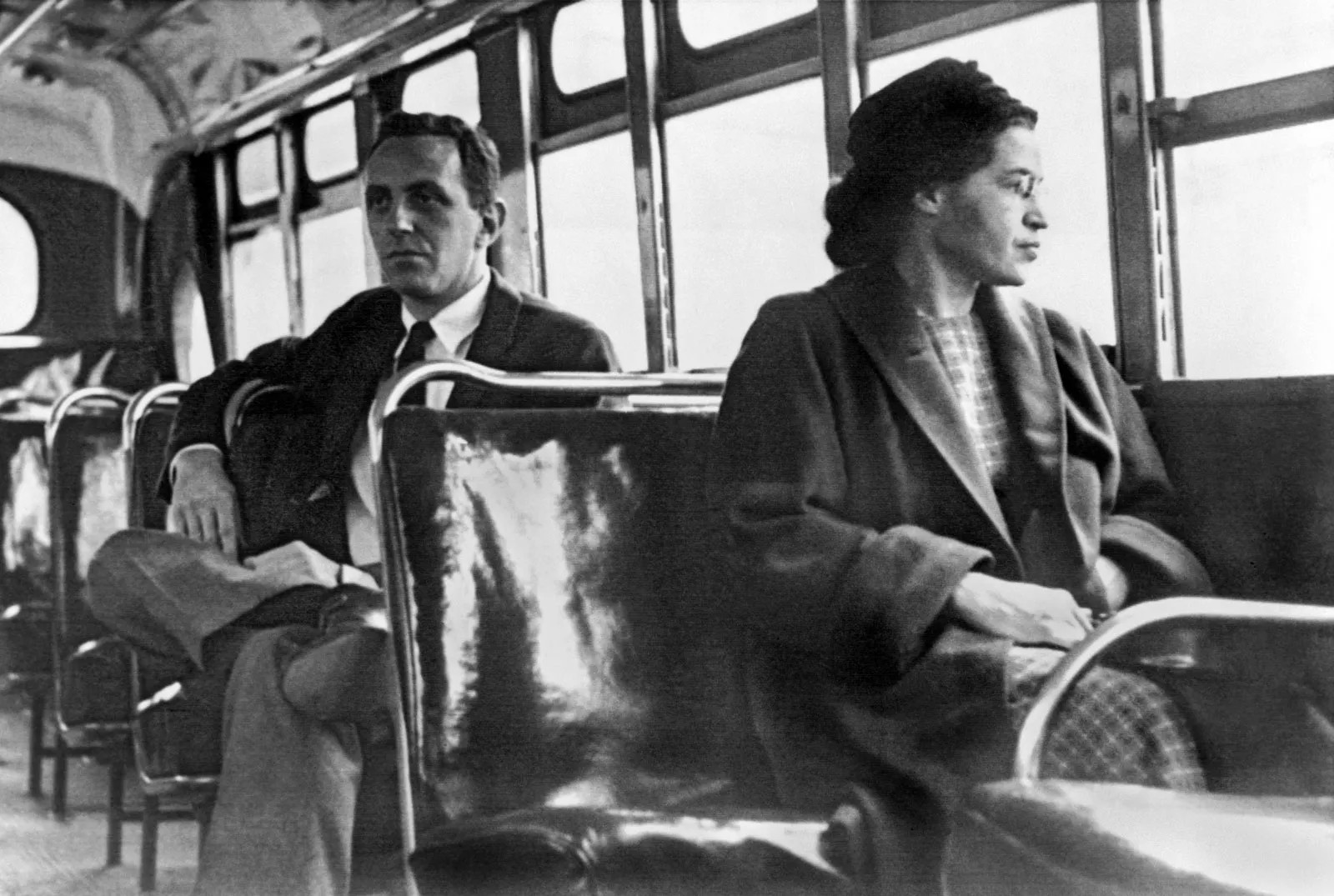
Rosa Parks’s quiet resistance on a Montgomery bus in December 1955 became one of the defining moments of the American civil rights movement. Her refusal to give up her seat to a white passenger was not a spontaneous act, but a deliberate stance against a deeply entrenched system of segregation that governed every aspect of public life in the American South. The consequences of her action reverberated far beyond Alabama, ultimately reshaping US politics, law, and social identity.
The context of everyday segregation
In the mid-1950s, Montgomery’s public transport system operated under rigid segregation rules. Black passengers paid the same fare as white passengers but were forced to sit in separate sections and routinely humiliated by drivers. Rosa Parks, a respected seamstress and long-time NAACP activist, had seen these injustices for years. Her decision not to move was born from fatigue not of the body, as she later clarified, but of constant discrimination. Her stance reflected the quiet defiance building among Black communities who were demanding recognition, fairness, and dignity.
The arrest that ignited a mass movement
Parks’s arrest triggered immediate outrage. Community leaders, including the young Martin Luther King Jr., organised a citywide bus boycott that would last 381 days. It was one of the first large-scale, non-violent protests of the era, demonstrating both discipline and collective strength. The boycott crippled the city’s transport revenues and exposed the moral bankruptcy of segregation to the wider world. Parks, meanwhile, became a symbol of steadfast courage, though she suffered personal and financial consequences for years after the event.

The legal turning point in the fight for equality
The boycott culminated in a landmark Supreme Court ruling declaring segregation on public buses unconstitutional. While Parks did not personally argue the case, her act of defiance set the legal process in motion. The ruling bolstered momentum for civil rights campaigns across the country, providing judicial backing to the growing demand for change. It also marked a moment when grassroots organising and constitutional law converged to dismantle a core pillar of institutional racism.
A legacy of resistance and enduring inspiration
Parks’s legacy extends far beyond a single moment on a bus. She became an international symbol of individual agency against unjust systems. Her refusal influenced future movements for gender equality, global human rights, and anti-apartheid activism. Today, she is remembered as a figure whose courage proved that profound change can begin with a single act. Her life remains a reminder that justice is often advanced not only by leaders on podiums but by ordinary individuals who decide that enough is enough.
Newshub Editorial in North America – 2025-12-01
Recent Comments