
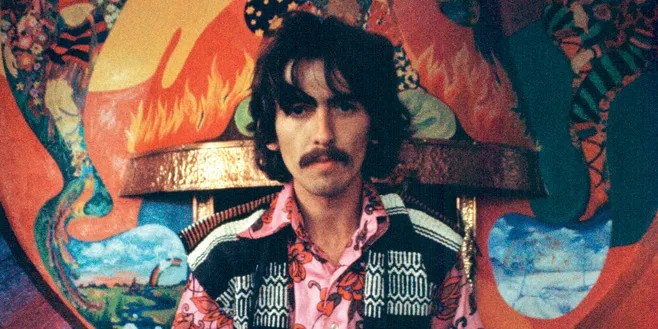
George Harrison’s ascent from the youngest Beatle to one of modern music’s most quietly influential architects remains one of the most remarkable arcs in popular culture. His work, once overshadowed by the Lennon–McCartney powerhouse, has steadily grown in stature, revealing an artist whose musical, spiritual and humanitarian contributions helped redefine what it meant to be a global musician.
The making of a musician
Harrison joined The Beatles at just 15, invited by Paul McCartney for a late-night bus audition in Liverpool. His early years in the band saw him developing a distinctive guitar style—precise, melodic, and heavily informed by American rockabilly. As The Beatles evolved, Harrison’s sound matured with them, and songs like If I Needed Someone and Taxman showed a songwriter capable of matching the sharpness and sophistication of his bandmates. Yet it was during the Sgt. Pepper and White Album sessions that Harrison’s creative voice became unmistakable, laying the groundwork for a solo renaissance that would arrive with global impact.
Eastern influence and spiritual direction
Harrison’s fascination with Indian music and philosophy became one of the defining shifts in 1960s pop culture. His sitar-led Norwegian Wood collaboration with John Lennon marked the instrument’s mainstream breakthrough, but it was Within You Without You and his partnership with Ravi Shankar that brought true cross-cultural understanding. Harrison’s spiritual path shaped far more than his music; it helped introduce meditation, Eastern instruments and wider global influences to Western audiences, influencing generations of musicians long after the Beatles’ split.


A solo career that rewrote expectations
When The Beatles dissolved in 1970, Harrison emerged with All Things Must Pass, a triple album of such depth and quality that it redefined expectations for any post-Beatles career. Anchored by the monumental My Sweet Lord and the philosophical title track, the album demonstrated Harrison’s ability to combine spiritual reflection with commercial strength. He later surprised the industry again by forming the “supergroup” Traveling Wilburys with Bob Dylan, Tom Petty, Roy Orbison and Jeff Lynne—a project that restored camaraderie and humour to late-career rock and earned enduring respect.
Humanitarian legacy and industry innovation
Harrison’s 1971 Concert for Bangladesh, organised with Ravi Shankar, effectively invented the modern benefit concert. Long before Live Aid or Global Citizen, Harrison proved music could mobilise global attention and resources for humanitarian emergencies. The concert set a template for artist-led philanthropy and remains one of his defining cultural achievements. His production work—including films through HandMade Films such as Life of Brian and Time Bandits—demonstrated an entrepreneurial restlessness that extended far beyond the studio.
The quiet Beatle’s lasting imprint
Though often described as shy or reserved, Harrison’s creative and cultural fingerprints remain everywhere: in world music fusion, in humanitarian fundraising, in meditative pop, in guitar-driven songwriting, and in the idea of the musician as global citizen. His influence lives on in artists who blend genres, explore spirituality, or use art for broader impact. Harrison’s legacy continues to grow because it was never anchored in volume or bravado, but in sincerity, introspection and a relentless search for meaning.
Newshub Editorial in Europe – 29 November 2025
Recent Comments