

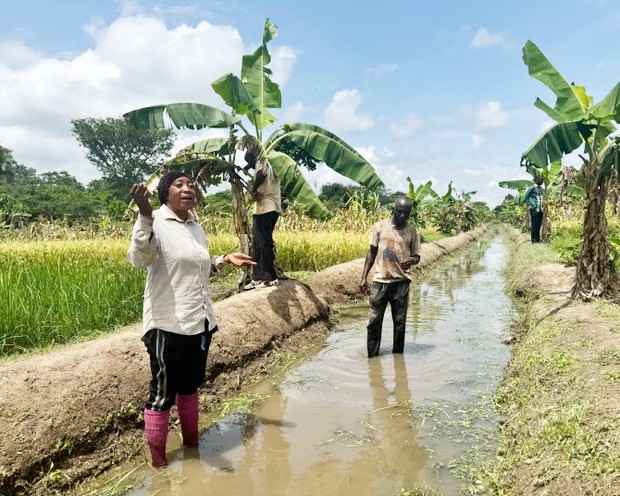
Africa faces mounting pressure to achieve rice self-sufficiency by 2030 as consumption continues to outpace production across the continent. The Africa Rice initiative is pioneering innovative approaches to give farmers greater control over their land through programmes like Smart Valleys, which aim to reduce flooding whilst increasing yields in previously underutilised inland valleys that cover 190 million hectares across sub-Saharan Africa.
Smart Valleys transforms farming prospects
The Smart Valleys initiative represents a breakthrough in African agricultural development, focusing on low-lying areas between hills with fertile soils that are ideal for agriculture but rarely cultivated due to poor water control. Salmata Ouattara, a farmer in Ivory Coast’s M’Be region, has seen her annual rice production more than double from 2 tonnes to 4.5 tonnes since implementing Smart Valleys techniques, increasing her income from 400,000 to 900,000 CFA francs.
The programme, backed primarily by Japan’s agriculture ministry, helps farmers better control water on their land through channels and other infrastructure to reduce flooding and increase yields. Only 10% of the 190 million hectares of inland valleys in sub-Saharan Africa are currently cultivated, representing enormous untapped potential for agricultural expansion.

Production challenges and import dependency
Africa imports about 40% of the rice it consumes – approximately 15 to 16 million tonnes annually, with more than half of these imports coming from India alone. This heavy reliance on imports was starkly highlighted in July 2023 when India banned rice exports, creating panic across African markets and forcing ministers to negotiate with New Delhi.
The continent’s agricultural infrastructure remains underdeveloped, with only a fifth of rice fields in Africa using irrigation, whilst the rest rely on unpredictable rainfall. Climate change has intensified these challenges, making climate-resilient farming systems essential for future food security.
Research and development initiatives
Africa Rice, established in 1971 and originally known as the West Africa Rice Development Association, operates from an 800-hectare research campus featuring testing sites, a seed science laboratory, and a gene bank containing 22,000 rice varieties. The organisation achieved its goal of doubling rice production within a decade and has now set its sights on self-sufficiency for member states by 2030.
The research focus extends beyond yield increases to nutritional enhancement. Scientists are developing rice varieties that are not merely energy-dense but nutrient-dense, whilst working to reduce glucose spikes associated with rice consumption. The initiative promotes parboiled rice consumption in countries like Ivory Coast, where it remains historically unpopular despite its lower impact on blood sugar levels.
Market dynamics and consumer preferences
Rice consumption has surged as the grain, once reserved for festive occasions, has become arguably the continent’s most popular staple food. Director General Baboucarr Manneh explains that rice’s popularity stems from its ease of preparation and perceived status, with consumers increasingly associating traditional foods like roots and tubers with poverty.
This shift in dietary preferences has created both opportunities and challenges for local producers, who must compete with heavily subsidised Asian imports that have traditionally flooded African markets at below-market prices.
Success stories emerge
Several African nations are making significant strides towards rice self-sufficiency. Tanzania has achieved self-sufficiency and is now exporting within East Africa, whilst Nigeria is approaching similar success in West Africa. These achievements demonstrate the potential for continental food security through targeted agricultural investment and policy support.
The combination of improved farming techniques, enhanced seed varieties, and better water management systems offers hope for meeting Africa’s growing rice demand through domestic production rather than continued import dependency.
REFH – Newshub, August 14, 2025
Recent Comments