

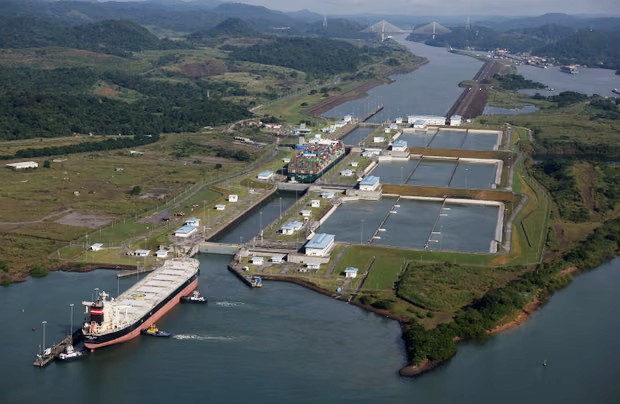
The Panamanian government has launched legal action against the Chinese-linked operator of two key ports on either side of the Panama Canal, escalating tensions at the heart of a deepening strategic standoff between the United States and China.
Legal challenge over control and compliance
Panama’s Maritime Authority confirmed this week that it has filed lawsuits aimed at revoking the long-term operating rights held by a Hong Kong-based company managing container terminals in Colón and Balboa. The ports, located at both the Atlantic and Pacific entrances to the canal, are considered crucial logistical chokepoints for global trade.
Authorities allege that the operator, believed to be closely tied to Beijing, has violated terms of its concession, including environmental, labour, and tax obligations. The lawsuits seek to “safeguard national interests” and reassert Panamanian sovereignty over critical infrastructure, according to government statements.

A geopolitical fault line
The legal offensive places Panama in the middle of a growing global competition for influence between Washington and Beijing. While the ports have operated under Chinese control since the late 1990s, rising tensions and strategic realignments in the Americas have put renewed scrutiny on foreign influence over vital assets.
US officials have privately raised concerns about China’s expanding footprint in the region, particularly in countries seen as strategically or economically vulnerable. Panama, which switched diplomatic recognition from Taipei to Beijing in 2017, has become a symbolic battleground for competing visions of global order.
In recent years, US lawmakers and intelligence officials have expressed fears that Chinese-controlled infrastructure near strategic waterways could be leveraged for coercive or military purposes. Panama, under pressure to show transparency and independence, appears to be recalibrating its stance.
Economic and political implications
The port operator denies wrongdoing and has vowed to challenge the lawsuits through arbitration. It maintains that its activities in Panama comply with all relevant legal frameworks and contribute significantly to the national economy through employment and tax revenues.
However, the case has already unsettled business confidence. Foreign investors are watching closely for signs that Panama may impose stricter controls on Chinese companies or reorient toward Western partners. Domestically, the lawsuits are seen as a high-stakes test of the government’s ability to balance economic pragmatism with growing strategic sensitivities.
Broader regional dynamics
This move comes amid a wave of similar reassessments across Latin America, where countries that once embraced Chinese investment with few conditions are now reviewing the political costs. In Ecuador, Costa Rica, and the Dominican Republic, recent deals have been subjected to increased scrutiny. Washington, meanwhile, is stepping up its diplomatic and economic outreach in the region.
For Panama, the outcome of these lawsuits could define its future role as a neutral gateway in global trade — or as a contested zone in a new era of geopolitical rivalry.
REFH – Newshub, 31 July 2025
Recent Comments