

Cacao, once sacred to ancient empires, is now at the centre of a multibillion-dollar global industry. But behind the allure of luxury chocolate lies a story of exploitation, inequality and increasingly urgent environmental and medical questions. From its Mesoamerican roots to today’s heavily consolidated trade, cacao offers a mirror to globalisation’s darker trade-offs.
Ancient ritual, colonial commodity
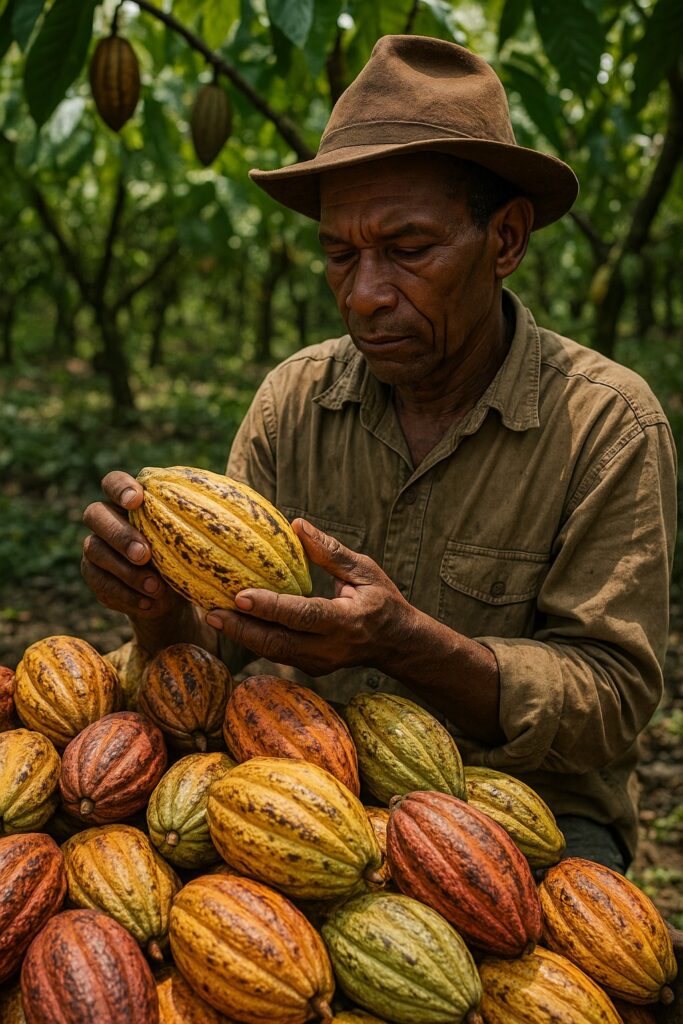
The history of cacao dates back more than 3,000 years to the Olmec, Maya and Aztec civilisations, where the bean was used both as a beverage and currency. The word ‘cacao’ itself comes from the Nahuatl language. When Spanish colonisers encountered cacao in the 16th century, it was quickly introduced to European courts. By the 18th century, colonial powers had industrialised their cultivation across Africa and Latin America, embedding it in imperial trade systems that relied on enslaved labour and extractive economics.
Modern production and global geography
Today, over 70 per cent of the world’s cacao comes from West Africa, with Côte d’Ivoire and Ghana dominating production. Other key producers include Indonesia, Ecuador, Nigeria and Peru. Despite being grown in the Global South, the value chain is largely controlled by companies headquartered in the Global North. The major players — including Barry Callebaut, Cargill, Olam and Mars — not only purchase but often finance, export and refine the beans. They also manage price hedging, quality certification, and logistics, leaving farmers with limited agency.


The money behind the sweetness
The global chocolate industry generates more than $130 billion annually, yet cacao farmers often earn less than $1 per day. The highest profits are extracted at the processing and retail levels, where corporations can brand and market final products at massive markups. Manufacturers and traders capture between 80 and 90 per cent of the value chain. Efforts to implement fair trade have improved incomes for a small percentage of producers, but most remain trapped in a cycle of poverty, debt, and poor infrastructure.
Criminal interests and shadow economies
Cacao has not escaped the attention of illicit networks. In regions of West Africa, smuggling of beans across borders to avoid taxes is common. Reports have surfaced of armed groups extorting farmers, and some plantations have been linked to child trafficking and forced labour. Although not coordinated by a formal cartel, this decentralised exploitation forms a kind of de facto black market. Enforcement is often weak due to corruption, underfunded labour inspectorates, and political sensitivity around export revenues.
Health effects: medicine or marketing?
Raw cacao is rich in antioxidants, particularly flavanols, which may contribute to reduced blood pressure, improved circulation and even cognitive benefits. It also contains magnesium and theobromine, linked to mood enhancement. However, once processed into high-sugar commercial chocolate, these benefits are largely offset. Moreover, recent tests have shown alarming levels of heavy metals — particularly cadmium and lead — in some cacao products, prompting warnings in the EU and United States. The medical potential of cacao remains real, but highly dependent on its form and purity.
The plight of farmers and workers
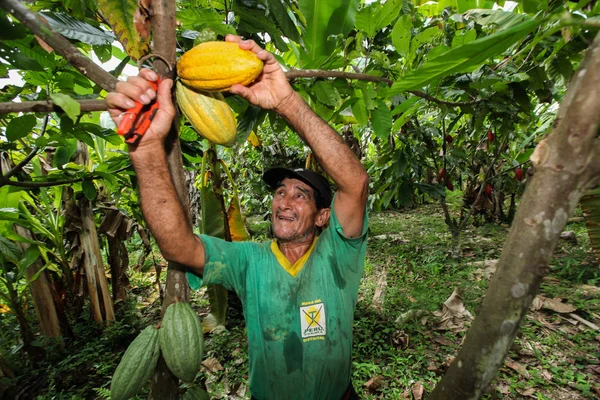
Roughly 5.5 million smallholder farmers rely on cacao cultivation for their livelihoods. Most work without mechanisation, access to credit, or social protections. Labourers — including women and children — endure long hours in harsh conditions. In Côte d’Ivoire and Ghana, child labour remains widespread, despite repeated corporate pledges to eliminate it. Certification schemes like Rainforest Alliance or Fairtrade cover only 15–20 per cent of global production. Even within those, audits have revealed inconsistencies and ongoing rights violations.
Land ownership and corporate dominance
A striking feature of the cacao industry is its asymmetric power structure. Farmers rarely own the land they cultivate, and often sell to middlemen well below market prices. In contrast, trading giants and manufacturers not only dominate exports but also influence national policy. In some countries, state-backed cacao boards set fixed prices, but these rarely reflect global spot rates. Meanwhile, speculative futures trading on commodities exchanges can lead to sharp price swings that affect local producers disproportionately.
Environmental cost and climate risk
Cacao thrives in tropical rainforest environments, but its expansion has contributed to deforestation in West Africa, Indonesia and parts of the Amazon. Intensive monoculture strains soil and biodiversity, while pesticide use presents health hazards. With climate change already shifting weather patterns, cacao trees — sensitive to even slight changes in temperature or rainfall — are at growing risk. Scientists estimate that suitable growing land in West Africa may shrink by 40 per cent by 2050 if emissions continue unchecked.
Technological innovation and biotech experiments
To safeguard future yields, biotech firms are experimenting with disease-resistant and climate-resilient cacao strains. Some have explored lab-grown cacao or fermentation-based synthetic chocolate as alternatives. However, adoption remains low due to cultural, regulatory and market resistance. Digital traceability tools and blockchain-based supply chain transparency have gained traction, especially among conscious consumers in Europe and North America. These technologies could empower farmers — but only if paired with investment in connectivity and training.
Fairer futures or sustained inequality?
Industry reform remains slow and piecemeal. While some companies have invested in local cooperatives or sustainability programmes, these efforts often operate as public relations shields. Critics argue that only structural changes — such as direct trade models, land reform, price floors, and legally binding corporate responsibility laws — will bring lasting change. The European Union has begun legislating against imported deforestation and child labour-linked goods, but enforcement and verification remain challenging.

Conclusion: the price of a chocolate bar
Behind every chocolate bar lies a vast and unequal economic system. From colonial plantations to modern conglomerates, cacao’s supply chain has been shaped by exploitation, opacity and power imbalance. Its future — already under pressure from climate change and demographic shifts — hinges on the ability of governments, corporations and consumers to reimagine not just how we source chocolate, but how we value those who cultivate its origins. Transparency, equity and innovation are no longer optional. They are essential to the survival of both the industry and the millions it employs.
REFH – Newshub, 30 July 2025
Recent Comments