
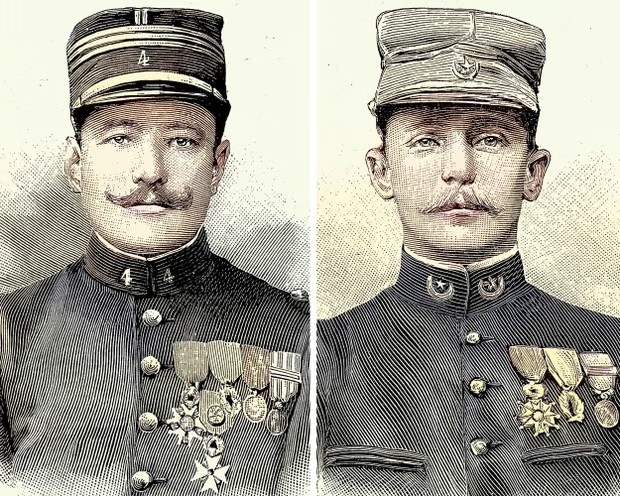
France has indicated openness to engage in dialogue regarding reparations for the 1899 Mission Afrique Centrale (MAC), a brutal colonial campaign in Niger during which thousands of unarmed civilians were killed and villages destroyed. This marks a significant shift in France’s approach to addressing its colonial past in West Africa.
Historical context and the MAC
The MAC, led by French officers Paul Voulet and Julien Chanoine, was one of the most violent colonial campaigns in Africa. The mission aimed to extend French control over Niger but resulted in widespread atrocities, including mass killings, looting, and the destruction of cultural heritage. The campaign left deep scars in the affected communities, many of which have been passed down through generations.
France’s response to calls for reparations
In response to a complaint filed by four Nigerien communities, supported by a UN special rapporteur, France’s permanent representative to the UN stated that the country remains open to bilateral dialogue with Nigerien authorities. The French government expressed a willingness to collaborate on provenance research and patrimonial cooperation but stopped short of acknowledging responsibility for the atrocities committed during the MAC.

While France cited the principle of non-retroactivity in international law, which limits accountability for actions taken before certain treaties were ratified, it has not ruled out discussions on restitution. However, the French government has yet to receive formal requests from the Nigerien authorities concerning the return of looted artefacts or human remains.
Demands from Nigerien communities
Nigerian activists, led by Hosseini Tahirou Amadou and supported by lawyer Jelia Sané, are calling for several measures, including access to archives, recognition of the atrocities, the return of looted artefacts, and the establishment of proper memorials. They emphasise that a formal acknowledgement of these crimes against humanity is a prerequisite to any reparation efforts.
Broader context of colonial accountability
This development comes amid a broader movement across Africa seeking justice for colonial-era atrocities. The African Union has designated 2025 as the “Year of Reparations,” urging former colonial powers to address historical injustices. France has previously acknowledged responsibility for other colonial atrocities, such as the 1947 Malagasy uprising and the 1945 Sétif massacre in Algeria. However, the MAC remains underrepresented in French curricula and public discourse.
Conclusion
France’s willingness to discuss reparations for the MAC represents a significant step toward addressing its colonial legacy in Niger. While the absence of an official apology or acknowledgement of responsibility remains a point of contention, the expressed openness to dialogue offers a potential pathway for healing and reconciliation. The coming months will be crucial in determining whether these discussions lead to meaningful actions and reparative measures for the affected communities in Niger.
REFH – Newshub, 18 July 2025
Recent Comments