
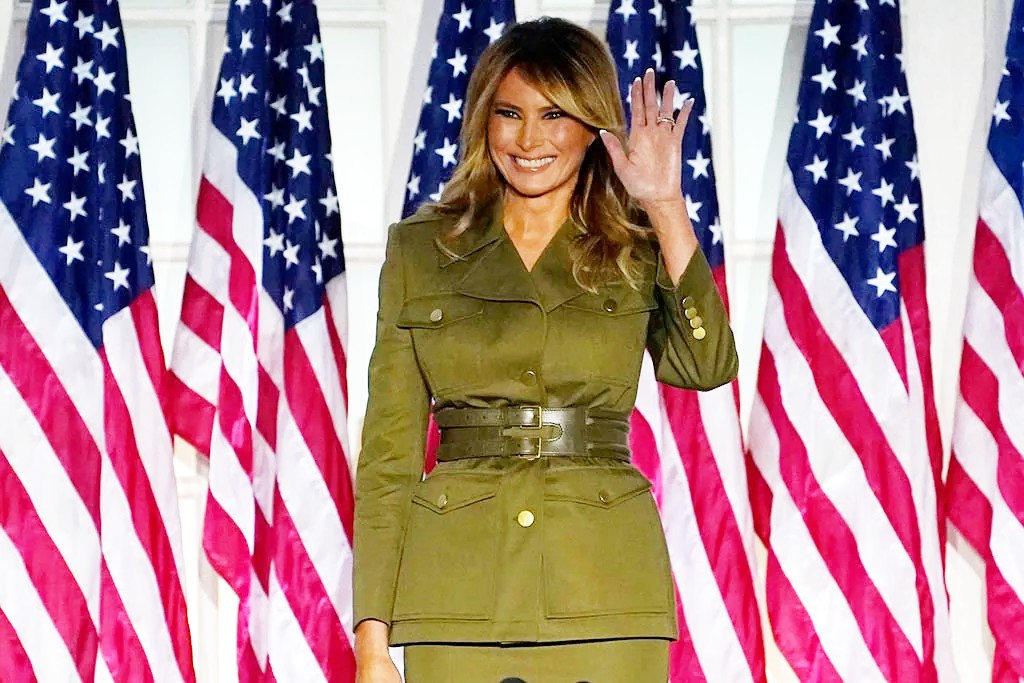
A fictional persona dubbed “Agent Melania Trumpenko” has re-emerged in online discourse, satirising former First Lady Melania Trump’s Eastern European origins amid renewed debate over U.S. support for Ukraine and Donald Trump’s shifting foreign policy stance. While rooted in parody, the narrative has provoked a broader conversation on misinformation, symbolism, and political strategy.
Origins of the Trumpenko idea
The term “Agent Trumpenko” first appeared during Donald Trump’s presidency as an internet meme, playfully suggesting that Melania Trump—born in Slovenia—was a covert agent with ties to Eastern Europe. Though entirely fictional, the nickname gained traction during the 2019 impeachment proceedings, when Ukraine became central to accusations against President Trump for pressuring foreign leaders.
In recent weeks, the term has resurfaced on social platforms and late-night commentary, with speculation fuelled by Donald Trump’s increasingly transactional approach to Ukraine’s defence funding and his assertion that Europe should bear the financial burden. The coincidence of Melania’s heritage with the geopolitical focus on Ukraine has reignited interest in the myth, albeit still in a satirical light.

Melania Trump’s silence and image
Melania Trump has remained a quiet figure since leaving the White House, refraining from public commentary on policy matters or international affairs. Her Slovenian background is often used as a humorous point of contrast to the American political establishment, but there is no credible evidence of any connection to Ukraine, intelligence activities, or foreign influence.
Despite this, the image of “Agent Trumpenko” has evolved into a symbolic representation of perceived opacity within Trump’s inner circle. It has been embraced by both critics and satirists to underscore broader concerns over foreign policy coherence, trustworthiness, and transparency.
Geopolitical backdrop
Donald Trump’s recent comments on U.S. defence commitments have raised alarm among NATO allies. By arguing that the European Union should cover most of Ukraine’s military costs, Trump has signalled a significant potential shift in Western alignment if he returns to office. The use of humour or satire in this context can mask deeper unease among policymakers, particularly in countries bordering Russia.
Analysts suggest the “Trumpenko” narrative reflects more than mockery. It is a cultural proxy for anxieties about isolationism, ambiguous loyalties, and a post-American order in which U.S. commitments may no longer be guaranteed. The persona thus becomes a shorthand for the complex entanglement of personal identity, global power, and political storytelling.
Caution amid satire
While satire plays a vital role in democratic societies, its blending with misinformation can distort public understanding. The Trumpenko fiction, while intentionally humorous, risks being taken seriously in fragmented media environments where nuance is lost and headlines dominate discourse.
For Melania Trump, the characterisation appears to be a projection rather than a reflection—an invention that says more about America’s mood and suspicions than her actual role. Yet its persistence serves as a reminder of how image, heritage, and silence can be shaped into potent political symbols, regardless of fact.
REFH – Newshub, 16 July 2025
Recent Comments