
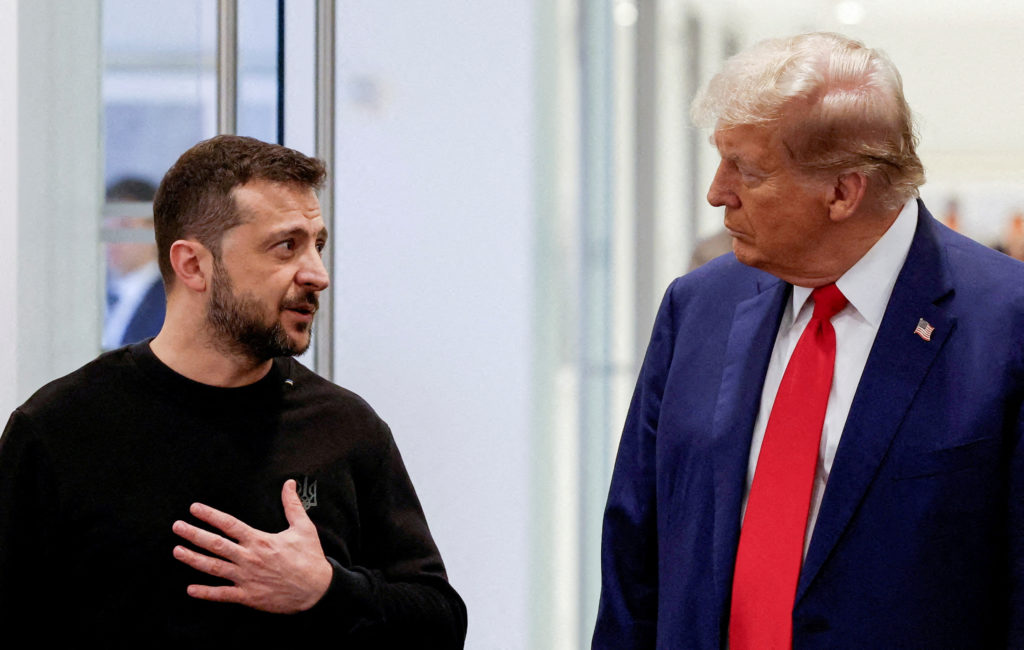
Donald Trump’s proposal to continue sending US weapons to Ukraine — but have Europe foot the bill — has sparked fresh uncertainty over the direction of Western support, adding complexity to the balance of power in the war and placing pressure on both Kyiv and Brussels.
A shift in burden, not in strategy
Speaking over the weekend, Trump reiterated his intent to keep arming Ukraine against Russia if re-elected, but made clear that American taxpayers would no longer be the primary financiers. “We’ll supply the weapons,” he stated, “but the EU has to pay for them.” The plan reframes US involvement not as an exit, but as a transactional pivot — maintaining firepower while outsourcing costs.
The message was met with concern in European capitals, where leaders fear both the financial burden and the strategic implications. Analysts suggest this approach could fracture transatlantic unity, undermining NATO cohesion and creating gaps in weapons delivery, especially if coordination falters.

Implications for Ukraine’s battlefield position
While Ukrainian officials have not publicly criticised the proposal, privately there is unease. Kyiv’s armed forces are heavily reliant on a steady flow of US-made systems — from HIMARS rocket launchers to advanced air defence batteries. Even if supply continues, a change in funding structure could cause delays, administrative friction, or political paralysis in Europe, all of which Ukraine can ill afford.
Moreover, shifting the financial burden without expanding production capacity raises questions about long-term sustainability. EU states, already juggling internal defence modernisation, may be reluctant or unable to fund US-procured weapons at Trump’s scale or pace.
Kremlin watches for division
From Moscow, Trump’s framing is likely viewed as an opportunity. The Kremlin has long aimed to divide NATO and erode Western commitment to Ukraine. A transactional, cost-conscious model could be spun domestically as evidence that support for Kyiv is weakening — even if the reality is more nuanced.
Vladimir Putin, facing battlefield pressure and domestic weariness over prolonged conflict, may seek to exploit any gap in unity or funding to regain the initiative. Russian media have already seized on Trump’s remarks, portraying them as Western fatigue.
EU response could shape the war’s next phase
The European Union now faces a difficult choice: absorb a larger share of the Ukraine burden or risk weakening the alliance’s military resolve. Some member states, notably Germany and Poland, may be willing to step up funding. Others, especially those with domestic political resistance to defence spending, could push back.
If Trump wins in November, his plan may rapidly alter the financial architecture of Ukraine’s war effort. But even before the election, the idea alone could create hesitation, encourage Russian escalation, or embolden far-right forces in Europe sceptical of continued aid.
Strategic uncertainty grows
For Ukraine, the challenge is twofold: maintaining steady defence support while navigating the unpredictable winds of US politics. For the EU, it is a test of both financial capacity and political will — whether to follow Trump’s lead, negotiate an alternative framework, or stake out a more independent security policy.
What’s clear is that Trump’s proposal — far from signalling a retreat — opens a new front in the contest over who pays for victory. That debate may soon prove just as consequential as what weapons are sent.
REFH – Newshub, 15 July 2025
Recent Comments