
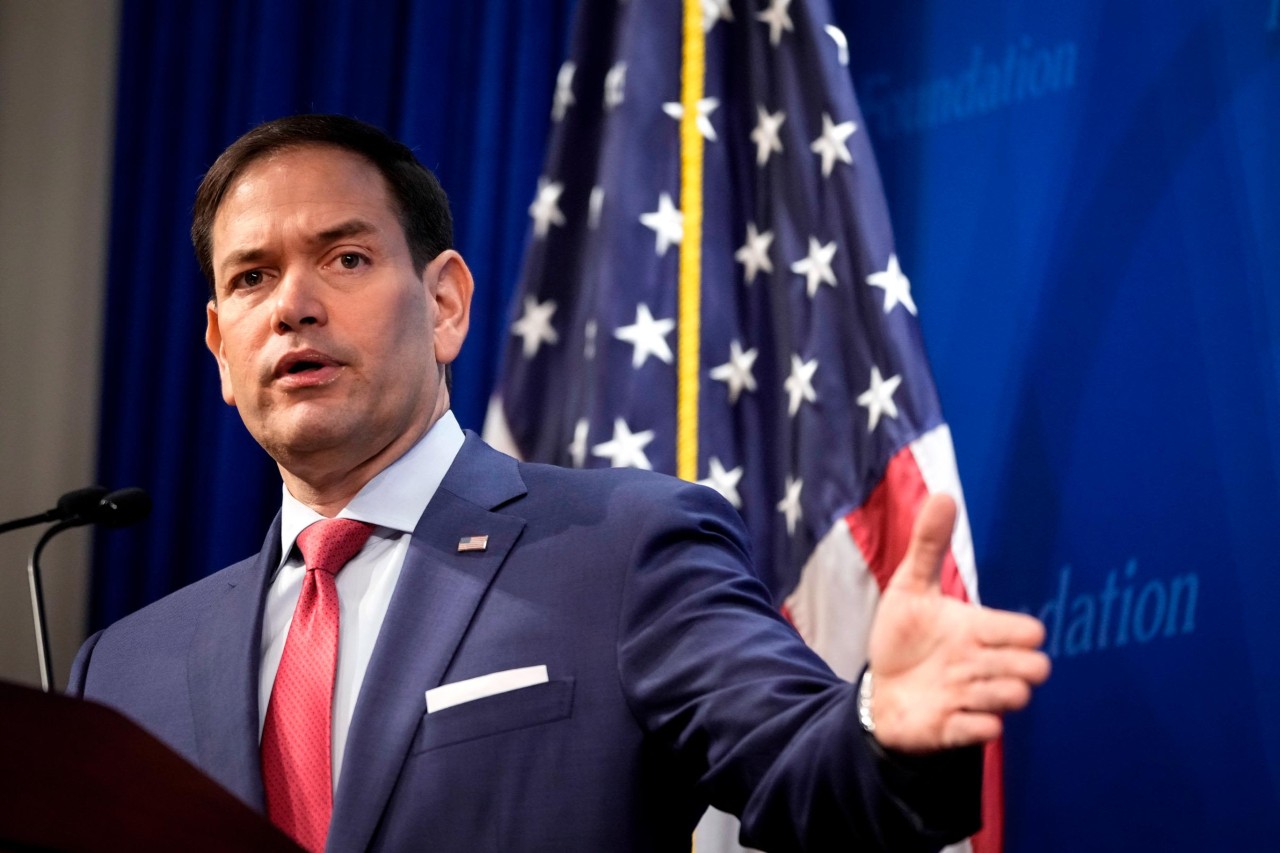
A sophisticated impostor posing as US Senator Marco Rubio has successfully contacted several foreign ministers and high-ranking politicians across Europe and beyond, prompting alarm over the vulnerabilities in diplomatic communications and the growing reach of political disinformation.
The scheme, reportedly carried out via video calls and emails, saw the individual impersonating the Florida senator engaging in extended conversations with at least two European foreign ministers, as well as several other senior figures. The impostor used convincing deepfake technology and pre-recorded audio, alongside real-time prompts, to simulate genuine political dialogue.
Officials familiar with the case say the motive appears to be intelligence gathering or reputational disruption. While no classified information is believed to have been shared, the stunt has embarrassed governments and exposed weaknesses in basic identity verification protocols at the highest levels.

The real Senator Rubio, a key figure in US foreign policy and vice chair of the Senate Intelligence Committee, has denied involvement and condemned the use of his image for fraudulent purposes. His office confirmed that neither he nor his staff had arranged or participated in the alleged calls.
Security experts warn the incident is part of a broader trend involving digital impersonation, with political deepfakes becoming increasingly realistic and difficult to detect in real-time. Similar incidents have targeted Ukrainian and Polish officials in recent months, and the technology is spreading rapidly across criminal and geopolitical actors.
In the aftermath, several foreign ministries have launched internal reviews to tighten vetting procedures. Some are now requiring pre-call authentication using encrypted diplomatic channels or video pre-screening. Others are warning staff to be cautious even when receiving messages from seemingly familiar sources.
Though the spoof did not appear to involve direct state sponsorship, analysts believe it aligns with tactics previously associated with Russian and other malign influence operations. The aim, they suggest, may be to sow confusion, waste time, and erode trust in democratic institutions.
The revelation comes at a sensitive time in transatlantic relations, with NATO preparing for its annual summit and the US embroiled in a turbulent election cycle. Disinformation and digital manipulation are expected to play a significant role in shaping narratives ahead of key votes and diplomatic decisions.
For now, the Fake Rubio episode serves as a warning shot. In an era where images, voices and identities can be simulated at the touch of a button, the guardians of diplomacy face a new and dangerous frontier—one where even a familiar face may be anything but.
REFH – newshub finance
Recent Comments