
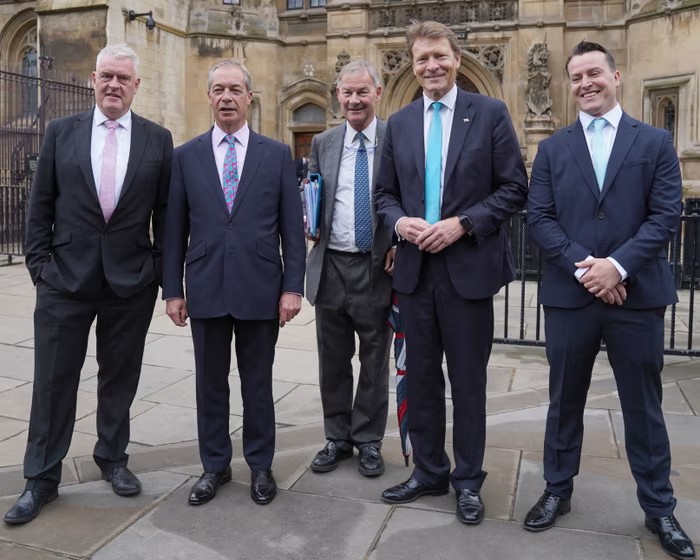
On 8 July 2025, Reform UK, the right-wing populist party led by Nigel Farage, continues to dominate UK political headlines, riding a wave of polling success while grappling with internal controversies. A YouGov poll projects Reform UK as the largest party in a hypothetical general election, potentially securing 42% of Commons seats with 26% of the vote, highlighting voter disillusionment with Labour and the Conservatives.
Founded in November 2018 as the Brexit Party and rebranded as Reform UK in January 2021, the party has capitalised on public frustration with mainstream politics. Its platform, centred on slashing immigration, cutting taxes, and scrapping net-zero policies, has resonated with voters, particularly in Brexit-supporting regions like the East Midlands and Wales. Reform UK’s membership has quadrupled since the 2024 general election, where it secured five seats with 14.3% of the vote, and recent local election wins have given it control of 10 councils. However, the party faces scrutiny over its rapid rise, with critics questioning its governance and candidate vetting processes.
Recent controversies have tested Reform UK’s cohesion. On 5 July, MP James McMurdock, representing South Basildon and East Thurrock, surrendered the party whip pending an investigation into allegations of improper business loans taken during the Covid-19 pandemic. McMurdock denies wrongdoing, but the move reduced Reform UK’s Commons presence to four MPs. Additionally, the party has faced backlash over appointing young, inexperienced candidates to significant council roles, including 19-year-old George Finch as interim leader of Warwickshire County Council and a 19-year-old overseeing children’s services. Critics, including Labour MP Preet Gill, argue these appointments reflect Reform UK’s unpreparedness for governance.

Reform UK’s recruitment of former Conservative MP Anne Marie Morris, suspended in 2017 for using a racist term, to lead its social care policy has also drawn criticism. Despite efforts to distance itself from far-right movements like France’s National Rally, the party’s hiring decisions and past candidate controversies, including racist online posts, have raised questions about its vetting. Posts on X reflect mixed sentiment, with some praising Reform UK’s outsider status and others condemning its chaotic internal dynamics.
Looking ahead, Reform UK is preparing for the 2026 Scottish Parliament elections, charging candidates £200 to stand to fund vetting processes after previous failures. Nigel Farage’s high media profile, including regular GB News appearances, keeps the party in the spotlight, though his absence from Commons votes has drawn criticism. French President Emmanuel Macron’s decision to exclude Farage from a UK state visit this week, while meeting Conservative and Liberal Democrat leaders, prompted deputy leader Richard Tice to call it an “outrageous snub,” underscoring Reform UK’s growing influence. With Labour’s popularity waning and the Conservatives struggling, Reform UK’s trajectory remains a focal point in British politics.
REFH – newshub finance
Recent Comments