
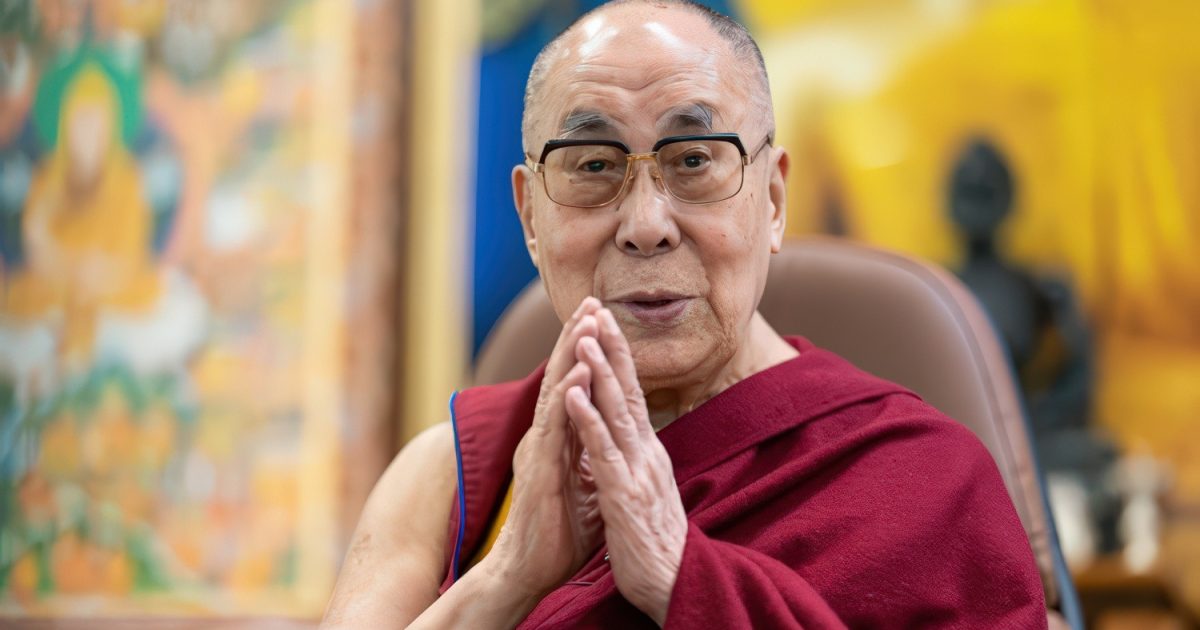
The 14th Dalai Lama, Tenzin Gyatso, turned 90 this weekend—marking a monumental milestone for one of the world’s most enduring spiritual and political figures. Born in a remote corner of northeastern Tibet in 1935 and recognised as the reincarnation of his predecessor at the age of two, the Dalai Lama has spent more than six decades in exile, advocating tirelessly for non-violence, compassion, and Tibetan autonomy. As he enters his tenth decade, questions swirl about the future of Tibetan Buddhism and who will be named the 15th Dalai Lama.
The Dalai Lama’s journey from a child in Amdo to the world stage is unparalleled. Enthroned as Tibet’s spiritual leader in 1940 and assuming full political power in 1950 during a turbulent period of Chinese invasion, he fled to India in 1959 after a failed uprising against Chinese rule. Since then, he has lived in Dharamshala, where the Tibetan government-in-exile remains based.
Over the years, the Dalai Lama has transformed the global perception of Tibet’s struggle from a nationalist cause to a human rights and cultural survival campaign. His ability to balance spiritual teachings with realpolitik diplomacy earned him the Nobel Peace Prize in 1989. He has met with presidents, popes, and rock stars, and his message of inner peace and compassion has found resonance far beyond Buddhist communities.

Despite his global stature, the Dalai Lama relinquished his political role in 2011, formally transferring leadership of the Tibetan movement to an elected prime minister. However, he remains the uncontested spiritual head of Tibetan Buddhism and a moral authority in the broader Buddhist world.
As the Dalai Lama ages, attention increasingly turns to the succession process—one steeped in mysticism, history, and now geopolitics. According to tradition, the next Dalai Lama will be recognised as a child believed to be the reincarnation of the 14th. This process, which has taken place for centuries, is led by senior Tibetan monks and includes spiritual visions, rituals, and signs.
But China has declared its own role in the matter. Since absorbing Tibet into the People’s Republic in the 1950s, the Chinese government has insisted it must approve all reincarnations of high-ranking lamas, including the Dalai Lama. The prospect of Beijing naming its own 15th Dalai Lama—while Tibetans in exile identify a different child—raises the spectre of a split papacy that could deepen the Tibetan diaspora’s divisions and undermine religious continuity.
The Dalai Lama himself has offered several potential solutions. At times, he has suggested the next Dalai Lama could be chosen before his death, or be born outside Tibet, or even that the institution might end with him. In a 2019 interview, he said the final decision rests with the Tibetan people, not the Chinese state.
As he turns 90, the Dalai Lama remains active—albeit more selective in his engagements. He continues to teach online, receive visitors, and release public statements. His health appears relatively stable, though he has curtailed foreign travel in recent years.
His birthday has been marked by prayers in monasteries, statements from global leaders, and celebrations among the Tibetan diaspora. But alongside the reverence lies a growing anxiety: the looming uncertainty over succession, and the unresolved status of Tibet.
In an era defined by authoritarian assertiveness and spiritual fragmentation, the legacy of the 14th Dalai Lama stands as a testament to humility, resilience, and the enduring power of moral authority. What happens next will shape not only Tibetan Buddhism but the very meaning of religious legitimacy in a divided world.
REFH – newshub finance
Recent Comments