
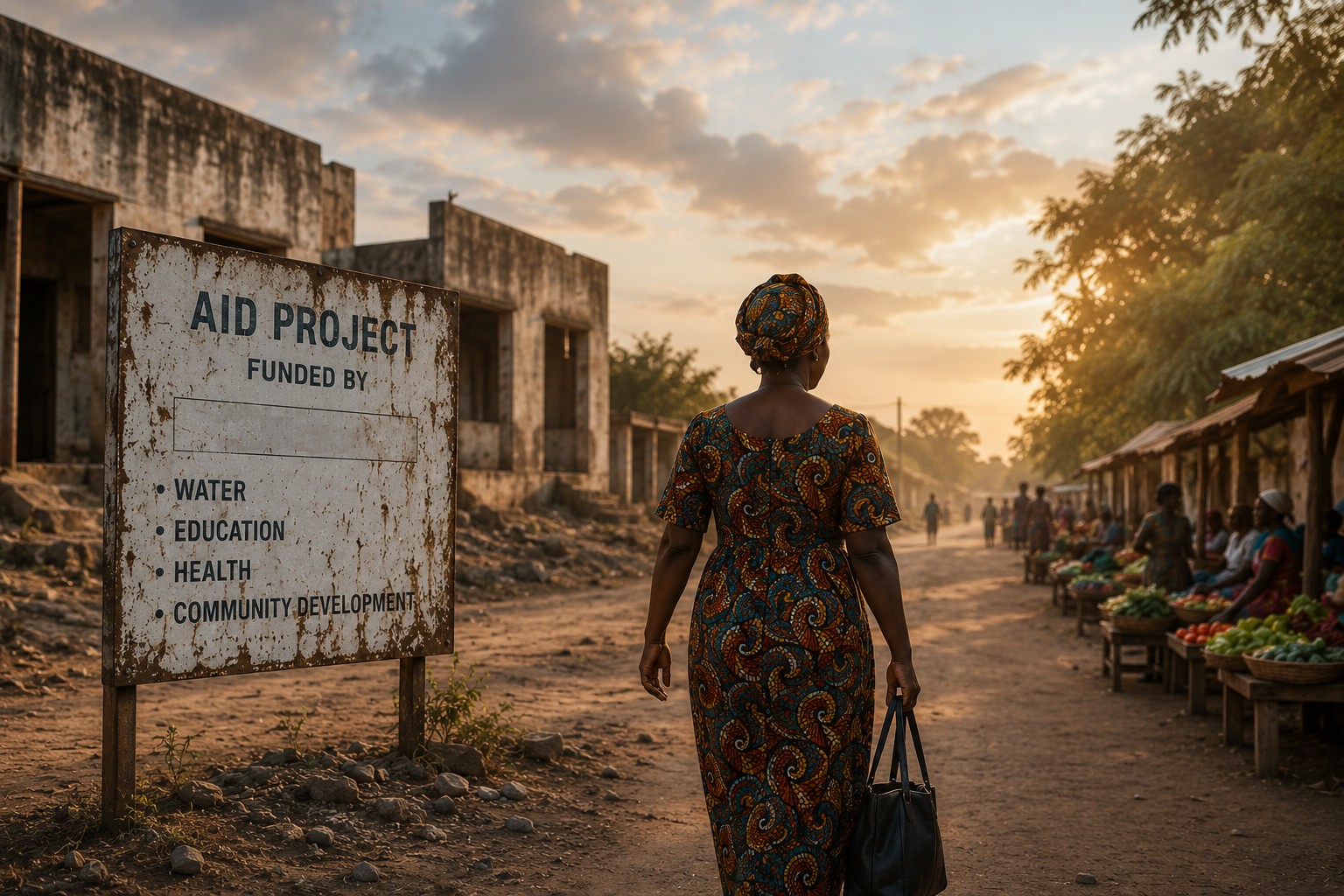
A new six-part series exploring whether financial inclusion could become one of the missing foundations of sustainable development.
For more than half a century, the international community has invested trillions of dollars in the fight against global poverty. Governments, development agencies, charities, foundations and NGOs have helped save millions of lives through emergency relief, healthcare, education, food security and humanitarian assistance.
Yet despite these achievements, hundreds of millions of people remain trapped in poverty and approximately 1.4 billion adults worldwide are still financially excluded from the formal economy. They work, trade, farm and run small businesses every day, yet lack access to secure payments, savings, responsible credit, insurance and the financial identity needed to participate fully in economic life.

This raises an important question: Has the global development community focused too much on delivering projects—and too little on building the economic systems that allow people to create lasting prosperity for themselves?
Over the coming weeks, this six-part series will examine some of the most important and sometimes uncomfortable questions surrounding modern development.
- Why do many well-funded projects disappear after donors leave?
- Where does development funding travel before it reaches local communities?
- Why do millions of women entrepreneurs remain financially invisible despite being economically active every day?
- Can financial inclusion become one of the missing building blocks of long-term development?
The series does not argue against humanitarian aid. Emergency assistance will always remain essential when people face war, famine, natural disasters and humanitarian crises.
Instead, it asks whether sustainable development requires something more.
By combining field observations, development research and practical examples from around the world, the articles seek to encourage a broader discussion about how poverty can be reduced not only through assistance, but through greater economic participation, financial inclusion and opportunity.
The first article, “From Aid to Access,” will be published shortly.
Peter Rinaldo

If you have an account with ChatGPT you get deeper explanations,
background and context related to what you are reading.
Open an account:
Open an account
Recent Comments