
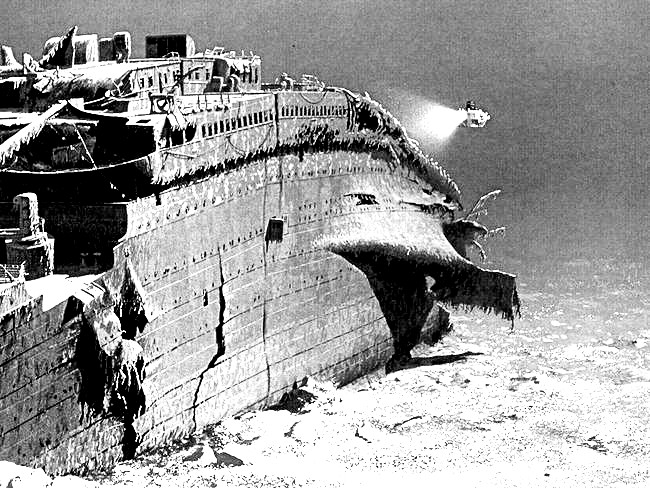
In the early hours of 15 April 1912, the Sinking of the Titanic shattered one of the most enduring claims in maritime history—that modern engineering had conquered the risks of the sea. What was hailed as the safest ship ever built became the site of one of the deadliest peacetime maritime disasters, leaving more than 1,500 people dead in the freezing waters of the North Atlantic.
A symbol of ambition and confidence
When RMS Titanic set sail from Southampton on 10 April 1912, it represented the pinnacle of early 20th-century industrial achievement. Built by Harland and Wolff in Belfast and operated by the White Star Line, the vessel was designed to combine luxury with advanced safety features, including watertight compartments intended to keep the ship afloat even after multiple breaches.
This engineering confidence led to the widespread belief that the ship was “unsinkable”—a label never formally claimed by its builders, but heavily promoted in public perception and media narratives. Titanic quickly became a floating symbol of human progress, carrying some of the wealthiest individuals in the world alongside emigrants seeking new lives in America.

Collision in the North Atlantic
Late on the night of 14 April 1912, as Titanic steamed through iceberg-laden waters, warnings from other ships had already been received but not fully acted upon. At approximately 11:40 pm, a lookout spotted an iceberg directly ahead. Despite evasive manoeuvres, the ship struck the ice, rupturing multiple compartments along its starboard side.
The damage proved fatal. While the watertight design could withstand limited flooding, the iceberg impact opened too many sections, allowing water to spill over from one compartment to another. Within hours, the fate of the ship was sealed.
A failure of preparedness
As the situation worsened, a critical flaw became evident: Titanic did not carry enough lifeboats for everyone on board. Designed to meet outdated maritime regulations rather than actual passenger capacity, the ship could accommodate only about half of those present.
Evacuation procedures were chaotic. Lifeboats were launched partially filled in the early stages, and confusion among passengers and crew compounded the tragedy. The principle of “women and children first” was applied inconsistently, and many third-class passengers faced barriers reaching the boat deck.
At 2:20 am on 15 April, Titanic broke apart and sank beneath the surface. Hundreds of people were left in the icy water, where survival time was measured in minutes.
Global shock and lasting impact
The disaster triggered immediate international outrage and led to sweeping reforms in maritime safety. Investigations in both the United States and the United Kingdom exposed systemic failures, including inadequate lifeboat provision, poor communication protocols, and insufficient attention to iceberg warnings.
In response, new regulations were introduced, including requirements for sufficient lifeboats for all passengers and continuous radio monitoring. The establishment of the International Ice Patrol further aimed to track ice hazards in the North Atlantic shipping lanes.
A legacy beyond the tragedy
More than a century later, the sinking of Titanic remains a powerful symbol of the limits of technological confidence. It serves as a case study in risk management, human error, and the consequences of overreliance on perceived innovation.
The story endures not only because of its scale, but because it captures a moment when belief in progress collided with the realities of nature—reminding future generations that even the most advanced systems are vulnerable when caution is overlooked.
Newshub Editorial in Europe – April 15, 2026

If you have an account with ChatGPT you get deeper explanations,
background and context related to what you are reading.
Open an account:
Open an account
Recent Comments