
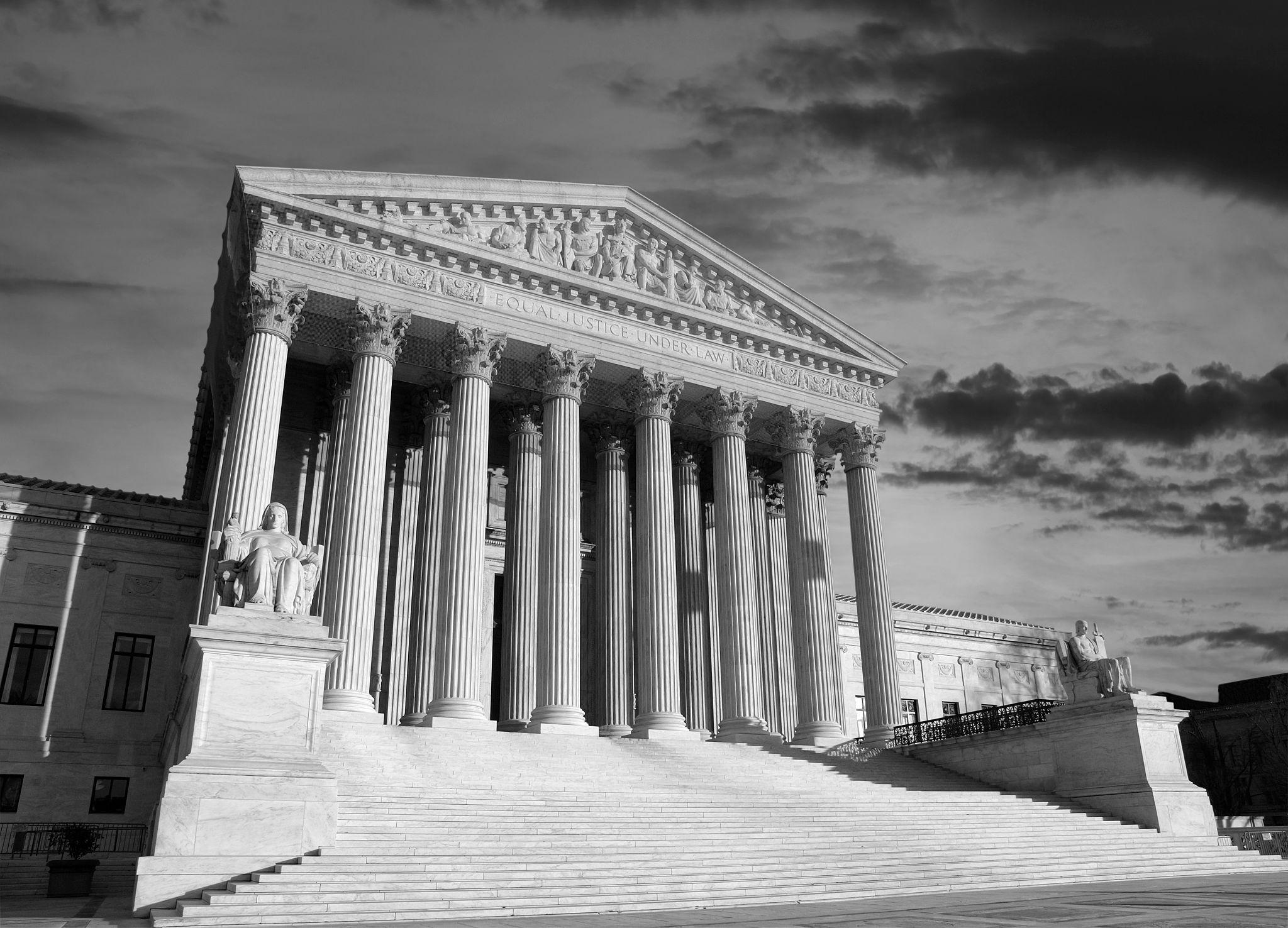
Donald Trump moved swiftly to impose a sweeping 10% global import duty on Friday, hours after the Supreme Court of the United States dealt his administration a legal setback on tariff authority — prompting an angry public outburst in which the president branded six justices a “disgrace to the nation” while praising the three who dissented.
The emergency tariff order, signed late in the day, applies across virtually all imported goods and represents one of the most aggressive trade measures of Trump’s presidency. The White House framed the move as a necessary defence of American industry and national security, arguing that the court’s ruling had undermined executive flexibility at a critical moment for domestic manufacturing.
Trump’s reaction was unusually personal and combative. In remarks delivered shortly after the decision, he accused the court majority of sabotaging US workers and “handing leverage to foreign competitors,” while commending the dissenting justices for what he described as their “courage to stand up for American sovereignty.”

Court setback triggers executive escalation
The Supreme Court ruling curtailed the administration’s ability to impose certain tariffs without clearer congressional authorisation, striking at the legal foundations of several trade actions pursued in recent months. While the judgment did not invalidate all existing duties, it narrowed the scope of executive power under emergency trade statutes — a development that senior officials privately acknowledged would complicate future negotiations.
Rather than seek legislative remedies, Trump opted for immediate escalation. The blanket 10% duty was justified under separate executive authorities, allowing the administration to bypass the specific legal constraints highlighted by the court. Trade lawyers noted that the move is likely to face rapid legal challenges, setting the stage for another round of courtroom battles.
Markets and allies react with unease
Financial markets responded cautiously, with investors weighing the inflationary impact of higher import costs against the political signal of renewed trade confrontation. Economists warned that a universal tariff risks feeding directly into consumer prices, particularly for electronics, clothing, and industrial components.
International partners expressed concern over the abrupt policy shift. Several governments indicated they were reviewing potential retaliatory measures, while trade diplomats warned that the decision could destabilise already fragile supply chains.
Within the United States, business groups urged restraint, arguing that broad-based tariffs function as a tax on consumers and manufacturers alike. Export-oriented sectors, including agriculture and heavy industry, also voiced fears of countermeasures abroad.
A familiar strategy with higher stakes
The episode underscores Trump’s longstanding preference for tariffs as both economic tool and political weapon. By pairing legal confrontation with unilateral action, the president signalled that judicial resistance would not deter his protectionist agenda.
Yet this time the stakes appear higher. With inflation pressures lingering and global trade flows already strained, analysts cautioned that a prolonged tariff standoff could amplify volatility across currencies, commodities, and equities.
Politically, the president’s attack on the Supreme Court marks a sharp escalation in rhetoric toward the judiciary, raising fresh questions about institutional stability as the administration presses ahead with its “America First” trade doctrine.
For now, the global 10% duty stands as a stark reminder of how quickly legal disputes can translate into economic shockwaves — and how decisively Trump is prepared to act when challenged.
Newshub Editorial in North America – 21 February 2026

If you have an account with ChatGPT you get deeper explanations,
background and context related to what you are reading.
Open an account:
Open an account
Recent Comments