
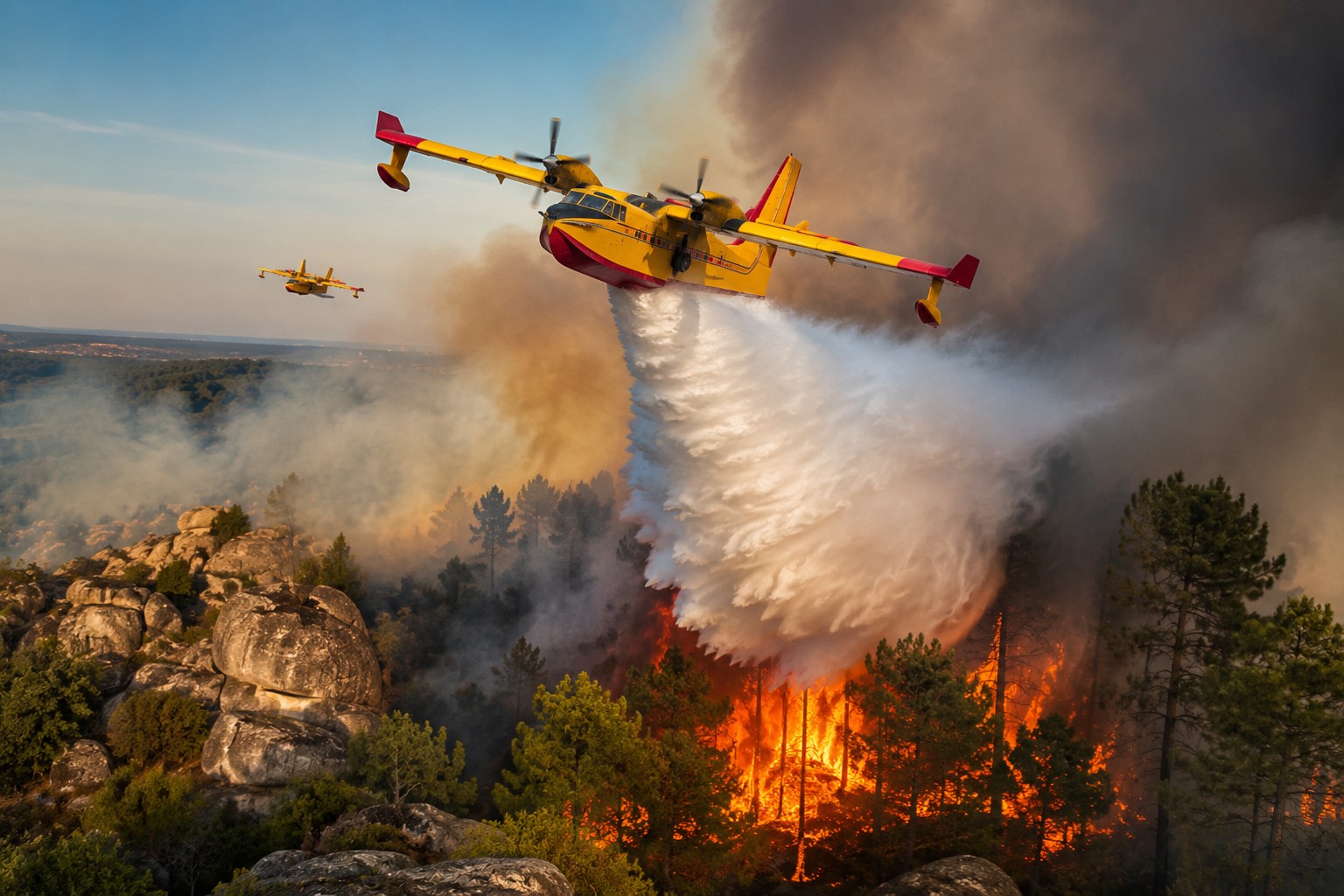
French authorities deployed firefighting aircraft and hundreds of emergency personnel after a fast-moving wildfire tore through the historic Fontainebleau forest southeast of Paris, forcing evacuations, disrupting transport and raising fresh concerns over Europe’s increasingly severe wildfire season.
Historic forest under threat
The blaze erupted on Sunday afternoon in the renowned Fontainebleau forest, approximately 60 kilometres southeast of the French capital. Within hours, the fire had spread across more than 800 hectares of woodland, prompting officials to describe it as “very virulent” and of an exceptional scale for the Paris region.


The forest, famous for its ancient oak and pine trees, dramatic sandstone formations and rich biodiversity, is one of France’s most visited natural areas and has long been regarded as a cultural and environmental landmark.
Aircraft deployed in unprecedented response
Around 400 firefighters, supported by helicopters, observation aircraft and two fire-bombing planes dispatched from southern France, were mobilised to contain the rapidly advancing flames. The use of aerial water bombers in the Paris region is highly unusual, highlighting the seriousness of the situation. Nightfall temporarily halted aerial operations, leaving ground crews to continue battling the fire throughout the night.
Emergency services concentrated on protecting nearby communities as the fire approached residential areas.
Evacuations and travel disruption
Residents in the village of Vaudoué were evacuated as flames threatened homes, while authorities prepared contingency plans for neighbouring communities should the fire continue to spread. Firefighters successfully defended several villages overnight, preventing wider evacuations.
The wildfire also caused significant disruption to transport infrastructure during one of France’s busiest summer travel weekends. Sections of the A6 motorway, the country’s main north-south highway, were closed, while high-speed rail services to and from Paris Gare de Lyon experienced delays lasting several hours.
Heatwaves intensify wildfire risks
France has endured repeated periods of extreme heat since late spring, leaving forests unusually dry and vulnerable to ignition. Officials say more than 17,000 hectares have already burned across the country this year, with projections suggesting the total could soon exceed 25,000 hectares—roughly double the area destroyed during the same period in 2025.
Scientists have repeatedly warned that longer heatwaves, prolonged droughts and more frequent extreme weather events are increasing wildfire risks well beyond southern Europe, with regions traditionally considered less vulnerable now facing similar threats.
As firefighters continue working to contain the Fontainebleau blaze, authorities remain on high alert, fearing that continued hot and dry conditions could trigger further fires across northern France during the peak of the summer season.
Newshub Editorial – Europe – July 13, 2026

Ask NF GPT
If you have an account with ChatGPT you get deeper explanations,
background and context related to what you are reading.
French authorities deployed firefighting aircraft and hundreds of emergency personnel after a fast-moving wildfire tore through the historic Fontainebleau forest southeast of Paris, forcing evacuations, disrupting transport and raising fresh concerns over Europe's increasingly severe wildfire season.
Recent Comments