
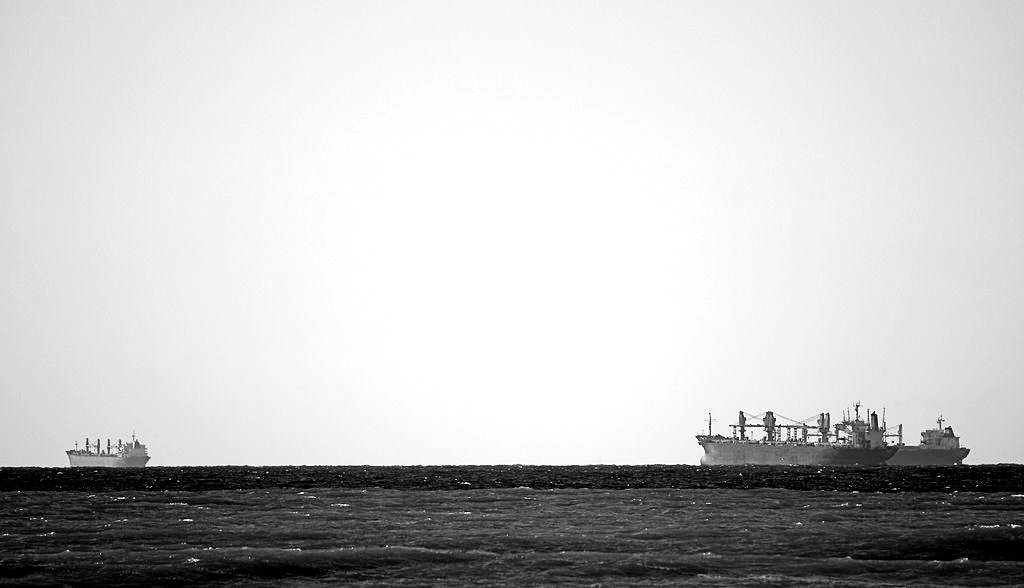
US President Donald Trump has raised fresh doubts over the fragile ceasefire with Iran, warning that the agreement risks collapsing as the Strait of Hormuz remains effectively closed. Despite earlier commitments tied to the truce, shipping through the critical waterway has not resumed at scale, undermining confidence in the deal.
Ceasefire conditions under strain
The ceasefire agreement between the United States and Iran was explicitly linked to the reopening of the Strait of Hormuz, a chokepoint that carries roughly a fifth of global oil supply. However, current conditions suggest that the terms are not being fully implemented.
Shipping activity remains severely restricted, with only limited vessel movement and many operators avoiding the route altogether due to security concerns and uncertainty.

This gap between agreed terms and on-the-ground reality has become the central issue threatening the credibility of the ceasefire.
Trump’s warning and shifting tone
Donald Trump has taken an increasingly hard line, stating that the ceasefire depends on Iran fully reopening the strait. He has also warned of potential escalation if access is not restored, signalling that the current pause in hostilities remains conditional.
At the same time, conflicting statements from Washington have added to uncertainty. Officials have suggested progress, while independent data and international observers indicate that traffic through the strait remains far below normal levels.
Iran’s control over the waterway
Iran appears to be maintaining tight control over access to the Strait of Hormuz, with reports indicating that passage is being restricted and, in some cases, conditioned on payments or coordination with Iranian authorities.
This approach effectively gives Tehran leverage over global energy flows, even during a ceasefire. It also complicates efforts to present the agreement as a stabilising breakthrough.
The continued closure highlights how control of the strait has become one of Iran’s most powerful strategic tools in the conflict.
Market and geopolitical implications
The uncertainty surrounding the strait has had immediate consequences for global markets. Oil prices have rebounded sharply after initial declines following the ceasefire announcement, reflecting concerns over supply disruptions.
For investors, the situation underscores the fragility of the current truce. Any prolonged disruption in the strait risks further volatility in energy markets, inflation pressures, and broader economic uncertainty.
Geopolitically, the disagreement over the ceasefire terms—particularly regarding maritime access—illustrates the deep mistrust between the parties and the difficulty of achieving a durable resolution.
A ceasefire in name, but not in function
While the ceasefire remains formally in place, its effectiveness is increasingly being questioned. The continued restriction of one of the world’s most important shipping routes suggests that key elements of the agreement are not being honoured in practice.
For Donald Trump, this has become a defining test of the deal’s credibility. Unless the Strait of Hormuz is fully reopened, the ceasefire risks being seen as symbolic rather than substantive.
Newshub Editorial in Middle East – April 10, 2026

If you have an account with ChatGPT you get deeper explanations,
background and context related to what you are reading.
Open an account:
Open an account