
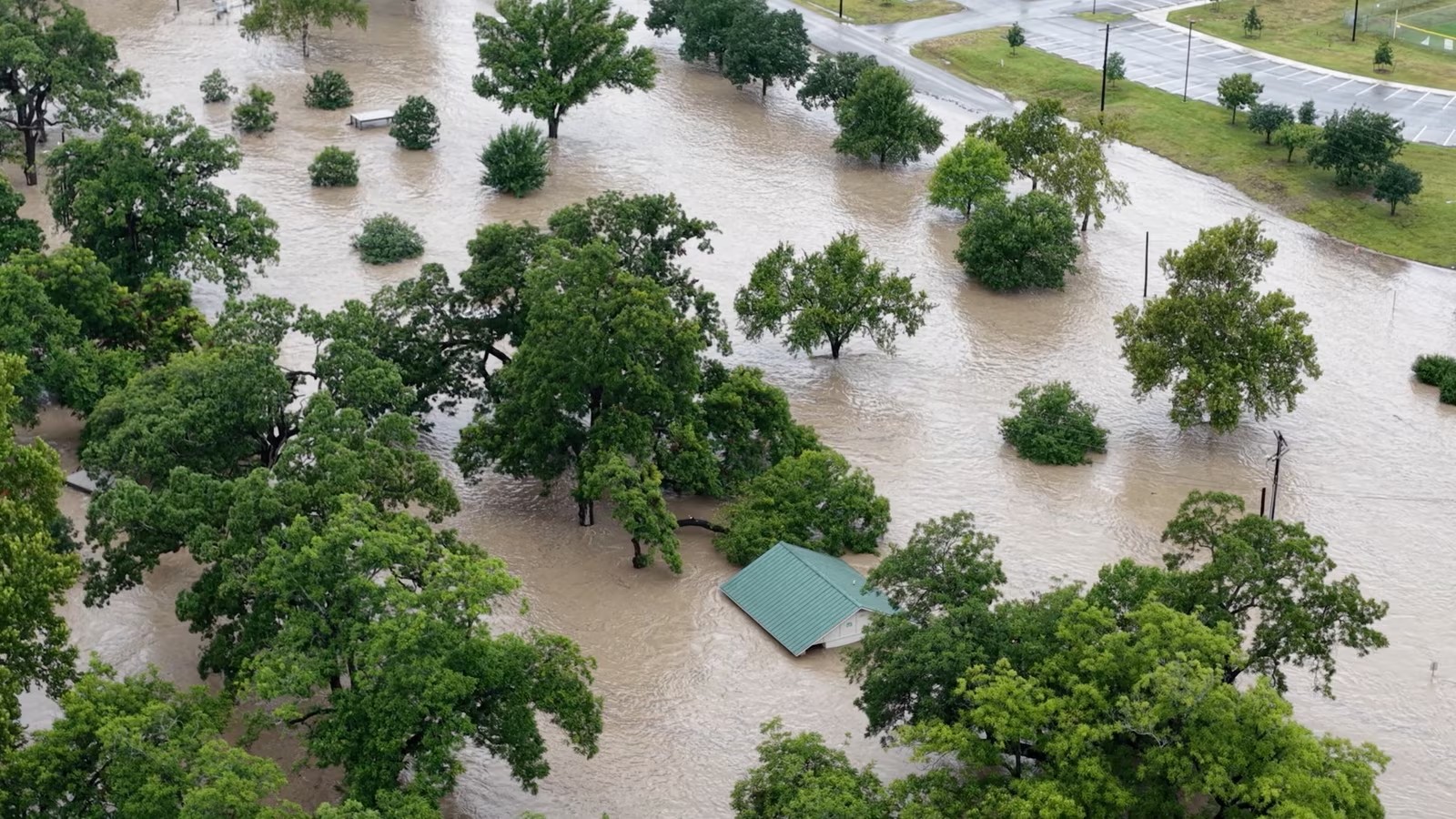
The catastrophic flooding that struck central Texas over the past week has left more than 80 dead and hundreds displaced, marking one of the deadliest weather events in the state’s recent history. Experts say the scale and suddenness of the deluge — which caused rivers to rise by dozens of feet within minutes — is consistent with what climate scientists have long warned: global warming is fuelling more intense, more dangerous rainfall events.
The worst of the flooding occurred in the Texas Hill Country, a rugged and scenic region west of Austin and San Antonio. More than 300 millimetres of rain fell in just a few hours, triggering flash floods that swept away vehicles, destroyed riverside campsites and overwhelmed infrastructure. In some areas, water levels in rivers rose by over eight metres in under an hour — a phenomenon emergency responders described as “unprecedented.”
Meteorologists point to a key factor: heat. As the atmosphere warms, it holds more moisture, creating ideal conditions for extreme downpours. In the case of Texas, a stalled weather front combined with high ocean temperatures in the Gulf of Mexico produced a “train” of thunderstorms that dumped historic amounts of rain over a concentrated area.

This sort of event, once rare, is becoming increasingly common. Scientists have observed a clear uptick in short-duration, high-intensity rainfall across the southern United States — a direct consequence of rising global temperatures. Texas, already prone to flooding due to its geology and weather patterns, is particularly vulnerable.
Beyond the meteorological factors, the disaster has highlighted failings in preparedness. Local authorities in Kerr and Kendall counties struggled to communicate flood warnings in time. Some residents reported receiving alerts only after water levels had begun to rise. Others in remote campsites said they had no mobile reception and no sirens to warn them.
Climate resilience experts say this is not simply a matter of better forecasting — it’s a question of infrastructure and investment. The National Weather Service and local emergency agencies have faced years of underfunding, leaving gaps in early warning systems, staff shortages, and outdated flood maps.
Urbanisation has also made things worse. As more land is paved over, rainwater that once soaked into the ground now runs off rapidly, overwhelming storm drains and rivers. Experts say cities and counties must begin to rethink planning and development rules to account for a wetter, more volatile future.
Environmental groups are calling on the federal government to treat events like the Texas floods as warnings. They argue that while disaster response is essential, the priority must shift towards prevention and adaptation: upgrading drainage systems, restoring wetlands, protecting flood plains, and designing housing around future risks, not past assumptions.
The floods in Texas are a national tragedy. But they are also a harbinger — a glimpse of the kind of climate-driven extremes that are set to become more frequent and more deadly unless serious action is taken. For those who have lost homes, livelihoods, and loved ones, that future has already arrived.
REFH – newshub finance
Recent Comments